For decades, traditional paper business cards have been the default way professionals exchange contact information. Whether at conferences, networking events, or business meetings, handing over a printed card has been a standard professional ritual. However, in today’s digital-first world, professionals are increasingly asking an important question: Are digital business cards actually worth it?
The answer depends on several factors, including cost efficiency, networking effectiveness, and long-term return on investment. A digital business card allows professionals to share contact details instantly through QR codes, NFC technology, or simple links. Instead of carrying stacks of printed cards, your information lives online and can be updated anytime.
With remote work, global networking, and mobile-first communication becoming the norm, digital networking tools are transforming how professionals connect. But like any technology, digital business cards come with both advantages and limitations. Understanding these factors can help you determine whether switching to a digital business card is the right decision for you or your team.
In this article, we will explore the real value of digital business cards, including their benefits, potential drawbacks, and the actual ROI professionals can expect when adopting them.
What Is a Digital Business Card?
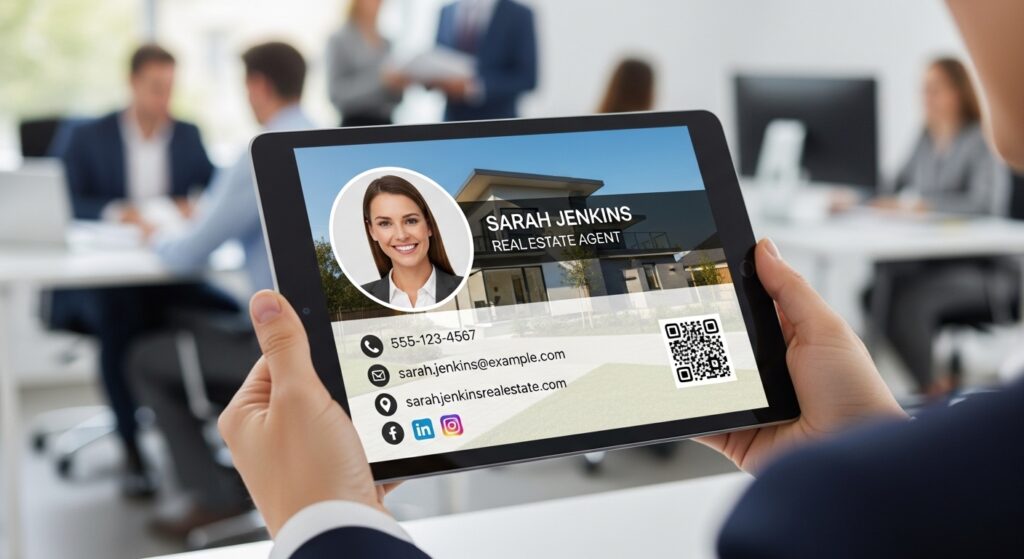
A digital business card is an online version of a traditional business card that allows you to share your contact information electronically. Instead of exchanging physical cards, professionals can send their digital card through a link, QR code, NFC tap, or messaging platform.
Unlike paper cards, digital business cards can contain much more than just a name and phone number. They can include social media profiles, company websites, portfolio links, appointment scheduling tools, and even embedded videos.
The biggest advantage is flexibility. If you change your job title, phone number, or company website, you simply update your digital card. There is no need to reprint hundreds of cards. Many modern platforms also include Analytics for Digital Business Cards and lead capture capabilities, allowing professionals to track who viewed their card or saved their contact information.
Why Digital Business Cards Are Growing So Fast
Digital business cards are becoming increasingly popular because they align with how people communicate today. Most business interactions now happen through smartphones, email, or online meetings rather than face-to-face exchanges.
According to research from the Statista digital networking report, global adoption of digital contact-sharing tools has grown significantly as professionals move toward paperless workflows. In fact, studies suggest that nearly 88% of traditional paper business cards are thrown away within a week of being received.
This statistic highlights a major inefficiency in traditional networking. Even if someone accepts your paper card, it does not guarantee they will actually use it. Digital business cards solve this problem by making contact sharing instant and convenient. Instead of manually entering details from a printed card, recipients can simply tap a link or scan a QR code and save the contact directly to their phone. This small change dramatically increases the likelihood that your contact information will actually be used.
The Pros of Using a Digital Business Card
One of the biggest advantages of using a digital business card is convenience. Professionals no longer need to carry stacks of printed cards or worry about running out during important networking events. With a digital card stored on your phone, you can share your details anytime and anywhere.
Another major benefit is cost efficiency. Traditional business cards require design, printing, and reprinting whenever information changes. These recurring costs add up over time, especially for businesses with large teams. Digital business cards eliminate most of these costs. Once created, they can be updated instantly without additional printing expenses. Over the long term, this significantly reduces operational costs for companies.
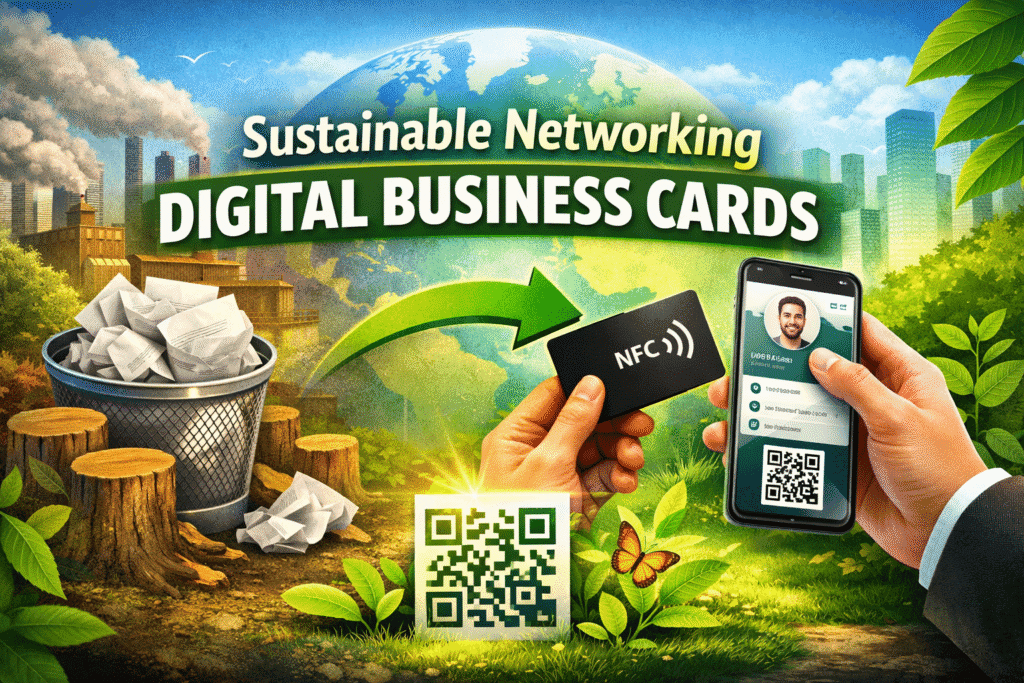
Environmental sustainability is another important advantage of adopting a digital business card. Traditional paper cards may appear small, but their environmental impact is significant when produced at a global scale. Research shows that around 100 billion paper business cards are printed worldwide every year, and producing them requires approximately 5–7 million trees annually. Even more concerning is that about 88% of these cards are thrown away within a week of being received, meaning most of the resources used for printing quickly become waste.
Switching to digital alternatives helps reduce this environmental footprint. A digital business card can be shared unlimited times without using paper, ink, or transportation resources. Beyond sustainability, digital cards also improve networking efficiency. When someone receives your card digitally, they can instantly access your website, social media profiles, or portfolio and save your contact information directly to their phone, making professional connections easier and more effective than traditional paper cards.
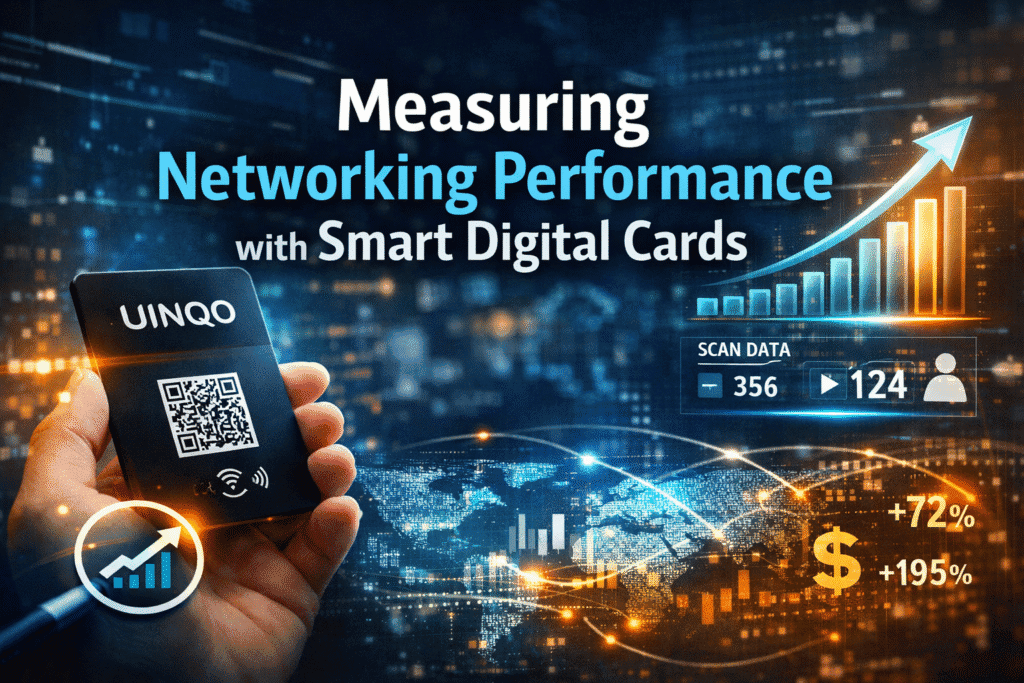
In addition, modern digital card platforms provide analytics and engagement insights. Professionals can track when their card is viewed, how often it is shared, and whether recipients interact with links or contact buttons. These insights help users understand the effectiveness of their networking efforts.
The Cons of Digital Business Cards
Despite their advantages, digital business cards are not perfect. One potential drawback is the reliance on technology. If someone does not have access to a smartphone or internet connection, sharing a digital card may become difficult.
Another limitation is user familiarity. Some professionals, particularly those in more traditional industries, may still prefer physical cards because they are familiar and tangible. However, this gap is quickly shrinking as younger professionals enter the workforce and digital communication becomes the standard.
There is also the issue of platform dependency. If your digital card is hosted on a specific platform, you must ensure that the service is reliable and secure. Choosing a trusted digital networking platform is therefore essential. Despite these limitations, the advantages of digital business cards often outweigh the drawbacks for most modern professionals.
Real-Life Networking
Consider the experience of a sales consultant attending a large international conference. At a traditional event, the consultant might hand out fifty paper business cards during the day. After the event ends, most of those cards are likely forgotten in pockets, bags, or desk drawers.
Now imagine the same scenario with a digital business card. Instead of handing out paper cards, the consultant shares a QR code that attendees can scan instantly. When someone scans the code, the consultant’s contact details are automatically saved to the attendee’s phone.
Even more importantly, the consultant can track how many people viewed the card and capture leads directly through the digital profile. This transforms a simple contact exchange into a measurable networking opportunity. The result is a much more effective and trackable networking strategy.
Understanding the ROI of Digital Business Cards
Return on investment is one of the most important factors when evaluating whether digital business cards are worth adopting. With traditional cards, businesses spend money on design, printing, and distribution. However, there is usually no way to measure how many cards actually lead to business opportunities.
Digital business cards introduce measurable ROI by providing analytics and engagement tracking. Businesses can see how often their cards are shared, how many people view them, and whether those interactions convert into leads or clients. This level of visibility helps organizations understand the real impact of their networking efforts.
Another factor influencing ROI is lead capture. Digital cards can collect contact information automatically when someone interacts with the card. Instead of manually entering details into a CRM system, the data can be stored instantly. For sales teams, this feature significantly improves efficiency.
How Modern Platforms Like UINQO Improve Digital Networking
While many digital card platforms exist, advanced solutions like UINQO take digital networking a step further by combining multiple tools into one platform. UINQO is designed not only for sharing digital business cards but also for managing leads and professional contacts efficiently.
One powerful feature is lead capture. When someone views or interacts with a digital card, their information can be captured automatically. This allows professionals to build a list of potential clients or collaborators without relying on manual data entry. Another useful feature is business card scanning. Professionals often receive traditional paper cards from contacts who still use printed cards. Instead of manually typing those details into a phone or CRM system, UINQO allows users to scan the card using their smartphone camera.
The platform uses OCR (Optical Character Recognition) technology to extract the information from the card and convert it into digital contact details. This dramatically reduces the time required to manage networking contacts. For example, imagine a startup founder attending several networking events in one week. After collecting dozens of paper cards, manually entering each contact would take hours. Using a business card scanner, the founder can digitize all contacts in minutes. This combination of digital card sharing, lead capture, and business card scanning creates a powerful networking ecosystem that helps professionals manage relationships more effectively.
Digital Business Cards for Teams and Organizations
Digital business cards are not only useful for individuals. Many organizations now provide digital cards for entire teams.
Sales teams, marketing professionals, and consultants benefit significantly from having standardized digital cards that represent the company brand. These cards ensure consistent branding while allowing each employee to share their personal contact information. Team-based digital card platforms also allow companies to manage employee profiles centrally. When a team member updates their contact details, the information is automatically synchronized across all digital cards.
This eliminates outdated information and ensures that clients always have the correct contact details. For businesses focused on lead generation, this centralized approach provides valuable insights into networking performance across the entire team.
The Future of Professional Networking
Professional networking is evolving rapidly as technology continues to reshape how people connect and communicate. Digital business cards are becoming an essential part of this transformation. In the near future, digital identity tools will likely integrate with CRM systems, event platforms, and professional networking services. This integration will allow professionals to track interactions, manage leads, and build relationships more efficiently than ever before.
Digital business cards also align with the broader shift toward contactless interactions. The global pandemic accelerated the adoption of contactless technologies, and many professionals now prefer digital exchanges over physical contact methods. As networking continues to move online and mobile communication dominates professional interactions, digital business cards are likely to become the standard rather than the exception.
Final Verdict: Are Digital Business Cards Worth It?
When evaluating the pros, cons, and ROI, the answer for most professionals is yes. Digital business cards offer a more efficient, cost-effective, and measurable way to network in a modern business environment. They eliminate printing costs, reduce paper waste, and provide valuable insights into how networking efforts translate into real opportunities.
UINQO further enhance the value of digital business cards by combining features such as lead capture, business card scanning, and OCR technology. These tools transform a simple contact exchange into a powerful networking system.
For freelancers, entrepreneurs, sales professionals, and growing teams, adopting a digital business card is no longer just a technological upgrade. It is a strategic investment in smarter networking. As business communication continues to evolve, professionals who embrace digital networking tools will be better positioned to build meaningful connections and convert those connections into long-term opportunities.