As the way professionals connect continues to evolve in our increasingly digital environment, effective networking isn’t defined by how many business cards you stock in your wallet, but by the meaningful relationships you cultivate and how you follow up after the initial introduction. Every meeting, handshake, QR scan, or NFC tap represents an opportunity to build a relationship. But opportunities are only valuable when they can be understood, tracked, and nurtured.
That is why the digital business card is rapidly replacing traditional paper cards. Instead of a static piece of paper that disappears into a drawer or trash bin, a digital business card transforms every networking interaction into a measurable connection. When someone taps your card, scans your QR code, or opens your profile, it becomes more than just an exchange of contact details. It becomes data, insight, and a potential business opportunity.
At UINQO, networking is built around this idea. Every tap matters. Every interaction carries meaning. And with the right analytics and tools, every connection can evolve into a long-term relationship or a new customer.
Networking Has Changed in the Digital Era
Professional networking used to rely on simple exchanges. Two people met, exchanged paper cards, and hoped the other person would remember to follow up later. Unfortunately, that system had many limitations. Paper cards could easily be lost, damaged, or forgotten. In fact, studies show that a large percentage of paper business cards are thrown away or lost within days of being exchanged.
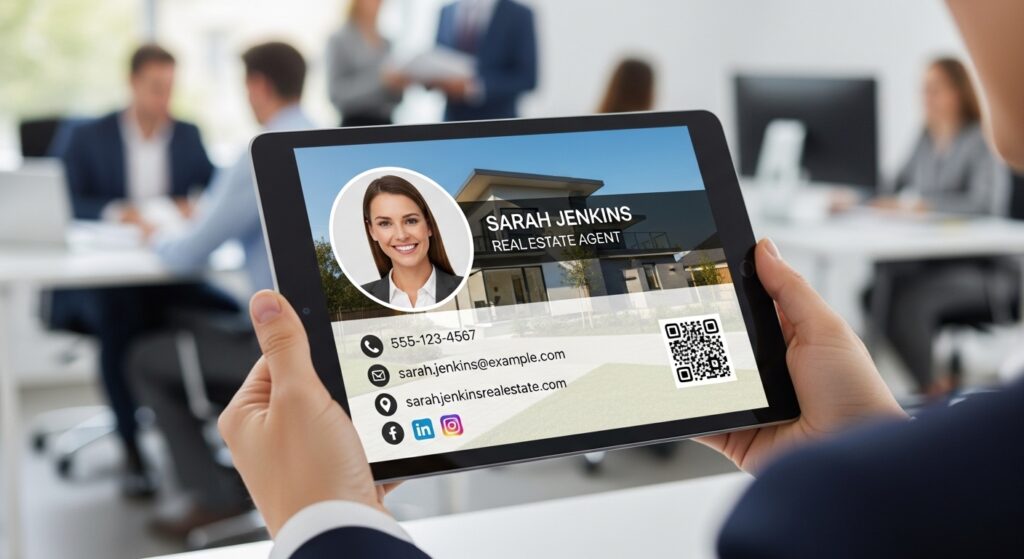
This is where the digital business card changes the entire experience. Instead of carrying stacks of paper cards, professionals can share their information instantly through NFC taps, QR code scans, or personalized links. The recipient can immediately save the contact information directly into their phone or connect with the sender through email, messaging, or social media with a single click.
The result is a faster, smarter, and more reliable way to connect. But the real transformation goes beyond convenience. Digital business cards introduce something that traditional networking never had before: analytics.
The global digital business card market is growing rapidly as professionals adopt smarter networking tools. According to a report by Market Research Future, the market is projected to reach USD 242.3 million by 2027, expanding at a compound annual growth rate of 11.2%, driven by increasing smartphone usage and demand for contactless information sharing.
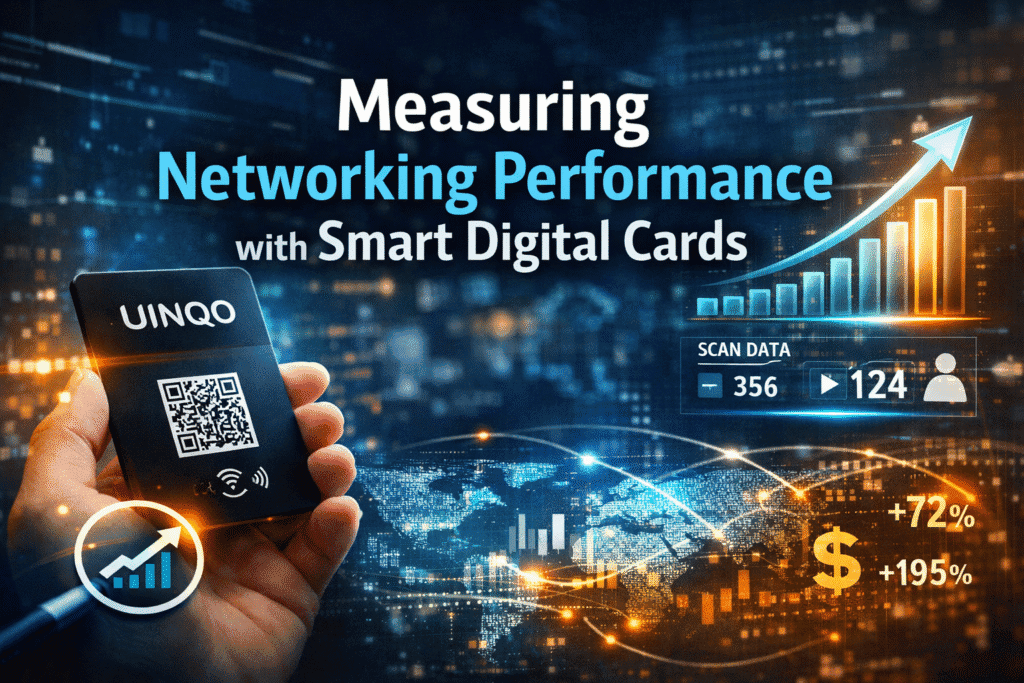
Analytics turn simple interactions into measurable insights. They show who engaged with your profile, when they interacted, and how interested they might be in your services or brand. In other words, networking is no longer guesswork. It becomes a strategic process.
From Static Contacts to Actionable Data
Traditional business cards are static by design. Once printed, they contain fixed information that cannot change. If your job title changes or your company launches a new website, the printed card quickly becomes outdated.
A digital business card, on the other hand, is dynamic. Information can be updated instantly, ensuring your contacts always have access to the most accurate details. But the real value lies in the data generated during interactions.
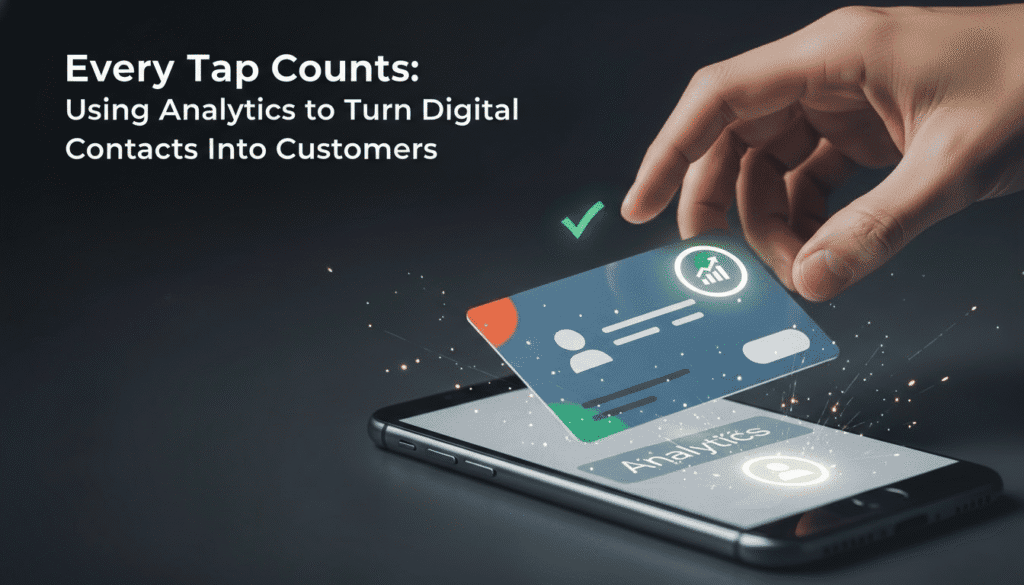
Whenever someone taps an NFC card, scans a QR code, or opens a digital profile, that action can be tracked and analyzed. These interactions reveal patterns and behaviors that help professionals understand their network better. Modern digital business card platforms can track metrics such as profile views, link clicks, and engagement frequency, allowing professionals to see how effective their networking efforts are. Instead of simply exchanging information, professionals gain insight into the level of interest behind each interaction.
For example, imagine meeting someone at a conference. They scan your digital business card and later revisit your profile twice during the same week. That behavior suggests curiosity or interest. With this information, you can reach out with a personalized follow-up message at exactly the right moment. This shift transforms networking from passive contact collection into active relationship management.
Why Analytics Are the Missing Piece in Networking
Networking without analytics is similar to marketing without data. You may attend events, exchange contacts, and have conversations, but without insights, you cannot measure what works.
Analytics fill that gap. A digital business card provides visibility into engagement patterns. It allows professionals to understand which profiles attract the most attention, which links receive clicks, and which contacts interact frequently. These insights reveal the real impact of your networking efforts.
For example, analytics may show that your portfolio link receives more clicks than your LinkedIn profile. This information suggests that your audience is particularly interested in your work rather than your professional background. Knowing this helps you refine how you present your profile.
Analytics also reveal the timing of interactions. Perhaps most scans happen during events, but profile revisits occur days later. That insight suggests a delayed decision process, meaning follow-up messages should be sent shortly after the event rather than immediately. By understanding these patterns, professionals can adapt their networking strategy and communicate with greater precision. In competitive industries where attention is limited, insight becomes a powerful advantage.
Turning Engagement Into Real Business Opportunities
Engagement alone does not guarantee success. Many people may view your profile or scan your card, but only a few will eventually become clients or partners. The difference between engagement and conversion lies in timing and personalization.
A digital business card equipped with analytics allows professionals to recognize signals of interest. When someone repeatedly visits your profile, saves your contact information, or clicks on your website link, it indicates a deeper level of curiosity. These signals provide the perfect opportunity for meaningful follow-up.
Instead of sending a generic message like “Nice to meet you,” professionals can respond based on actual engagement. For example, if someone clicked on your portfolio page, a follow-up conversation can reference that specific interest. This approach makes communication more personal and relevant.
Digital networking therefore becomes less transactional and more human. Conversations are built on genuine context rather than random outreach. Over time, this leads to stronger relationships and higher conversion rates. Every tap becomes the beginning of a conversation rather than the end of an introduction.
Smarter Contact Management Through Digital Networking
Another major advantage of the digital business card is the ability to organize and manage contacts intelligently. Traditional business cards often accumulate in drawers or piles, making it difficult to track connections over time. Without digital records, professionals may forget important contacts or lose valuable opportunities.
Digital platforms solve this problem by transforming contacts into searchable and organized data. When someone shares their information through a digital card, the contact details can automatically be stored and categorized.
This integration turns casual networking encounters into structured opportunities. Instead of relying on memory or scattered notes, professionals can easily identify high-priority contacts, track past interactions, and schedule follow-ups.
The result is a cleaner and more efficient networking process. Rather than managing dozens of disconnected contacts, professionals build a living network that evolves with their business.
Building a Strong Personal Brand Through a Digital Business Card
Networking is not only about exchanging information. It is also about presenting your professional identity.
A digital business card offers far more flexibility than traditional cards when it comes to personal branding. Unlike paper cards, which are limited in size and content, digital cards can include multimedia elements such as links, portfolios, social media profiles, and interactive features. This transforms a simple contact card into a digital representation of your brand.
For entrepreneurs, freelancers, consultants, and sales professionals, this is particularly valuable. Instead of describing your work verbally, you can instantly showcase your projects, services, and expertise through your digital profile.
Analytics further enhance this process by revealing what resonates with your audience. If one profile design receives more engagement than another, that insight helps you refine your presentation. Over time, your digital presence becomes stronger, clearer, and more aligned with your professional goals. Networking therefore becomes a continuous process of improvement rather than a one-time interaction.
The Growing Role of Digital Business Cards in Modern Networking
The rise of the digital business card reflects a broader shift in how professionals connect.
Networking is no longer confined to physical meetings. Professionals now interact through online events, social media platforms, virtual conferences, and global collaborations. Digital cards make it possible to share contact information instantly across devices and locations without relying on printed materials.
This flexibility allows connections to happen anywhere.
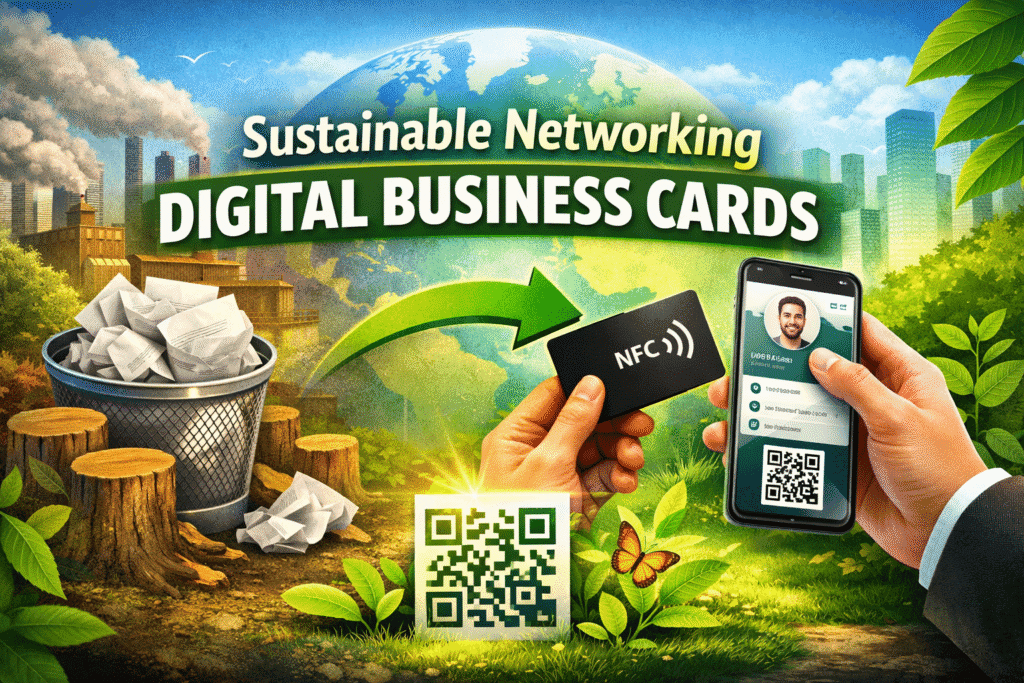
Traditional paper business cards have a much larger environmental footprint than most people realize. Each year, around 100 billion paper business cards are produced worldwide, leading to the loss of almost six million trees, and nearly 90% of them are discarded within a week, often ending up in landfill where they release potent greenhouse gases such as methane as they decompose. By contrast, digital business cards eliminate paper use and waste entirely, helping professionals conserve natural resources, reduce carbon emissions, and support more sustainable networking practices. As digital tools continue to evolve, the adoption of smarter, eco‑friendly alternatives is likely to increase.
Professionals are no longer satisfied with simply exchanging contact details. They want to understand the effectiveness of their interactions, track engagement, and build long-term relationships based on data and insight. Digital business cards meet this demand by transforming networking into a measurable and strategic activity.
The Future of Networking Is Measurable
The future of professional networking will not be defined by how many contacts someone collects. It will be defined by how well those connections are understood and nurtured.
The digital business card represents this shift toward intelligent networking. By combining instant sharing, interactive profiles, and real-time analytics, it transforms everyday interactions into opportunities for growth.
Every tap, scan, or profile view becomes part of a larger story about engagement and relationships. Platforms like UINQO embrace this philosophy by bringing together smart NFC cards, QR code sharing, personalized landing pages, and analytics into one unified ecosystem.
Instead of treating networking as a series of disconnected events, UINQO turns it into a continuous journey of insight and connection. Because in the modern professional world, every introduction carries potential.
Every tap is a signal and connection are a possibility. And with the power of a digital business card, those possibilities can turn into meaningful conversations, lasting partnerships, and real business growth.