In modern business, networking is no longer just about exchanging contact details. It has evolved into something far more strategic. Professionals want to understand who interacts with their brand, what interests their contacts, and how those interactions translate into real opportunities. As digital transformation reshapes how companies operate, the traditional paper business card is rapidly becoming outdated.
Online business cards are emerging as the modern alternative, offering not only convenience but also powerful analytics that help businesses understand engagement and improve networking outcomes. Instead of simply sharing information and hoping someone follows up, professionals can now track interactions, measure engagement, and make smarter decisions about their networking strategies.
By 2026, this shift is becoming increasingly evident. Businesses are recognizing that networking should be measurable, data-driven, and aligned with broader growth strategies. Platforms like UINQO represent this new generation of networking tools, transforming digital business cards into intelligent platforms that combine connectivity, engagement tracking, and relationship management.
The real power of digital business cards lies in the analytics behind them. Every scan, tap, or click becomes a data point that reveals valuable insights about audience behavior. These insights allow businesses to turn simple introductions into measurable opportunities for growth.
The Limitations of Traditional Business Cards
For decades, paper business cards were a staple of professional networking. They were exchanged at conferences, meetings, trade shows, and social events as a simple way to share contact information. Despite their widespread use, however, traditional business cards have always had serious limitations.
A paper card can easily be misplaced, forgotten, or discarded. In fact, research suggests that a large percentage of printed business cards are thrown away within a week of being received. Once the card leaves your hand, you have no idea what happens next. Did the recipient save your contact details? Did they visit your website? Did they consider reaching out to you later?
There is no way to track engagement with a traditional card. This lack of insight creates a gap between networking effort and actual results. Professionals might attend multiple events and distribute hundreds of cards, yet still have no clear understanding of which connections were meaningful or which opportunities were worth pursuing.
Another challenge with paper cards is that they cannot be updated. If your job title changes, your phone number updates, or your company launches a new service, the printed information quickly becomes outdated. Businesses must continually reprint cards, leading to unnecessary costs and environmental waste. In an era where nearly every marketing activity is measured and analyzed, relying on a static piece of paper for professional networking feels increasingly inefficient.
The Rise of Digital Business Cards
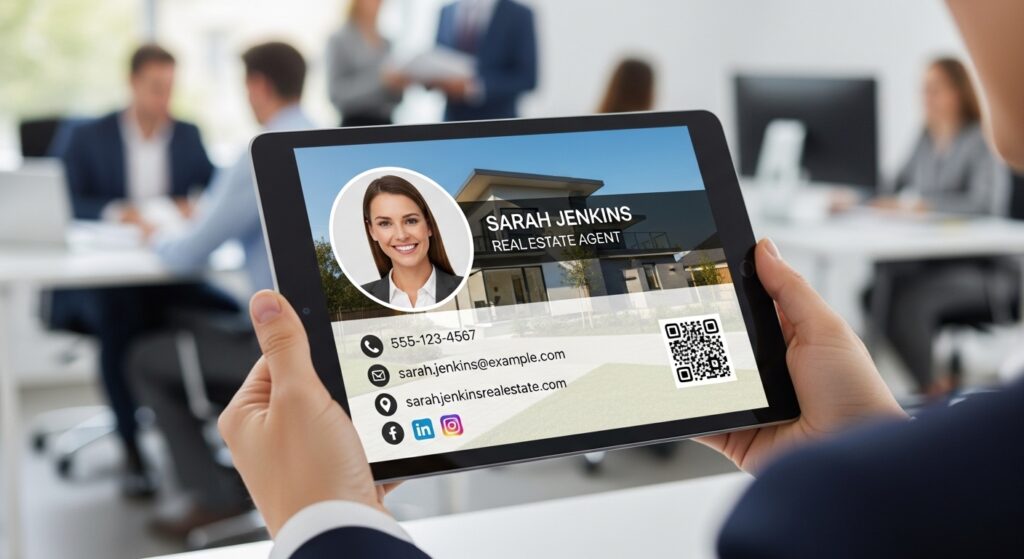
Digital business cards solve many of these problems by combining contact sharing with modern technology. Instead of handing someone a physical card, professionals can share their digital profile through a QR code, NFC tap, link, or mobile wallet.
When someone scans the card, they gain immediate access to a digital profile that may include contact details, websites, portfolios, social media links, appointment booking options, and multimedia content.
The difference is that digital cards are not static. They function more like dynamic landing pages that can be updated at any time. If a business changes its services or branding, the information can be updated instantly without reprinting anything.
Large corporations are also rapidly adopting digital business cards as part of their broader digital transformation strategies. Recent market research shows that the global digital business card market is projected to grow from around $181 million in 2024 to more than $389 million by 2032, reflecting strong adoption across enterprises and large organizations. Many companies are now integrating digital cards into employee onboarding, CRM systems, and networking workflows to streamline contact management and improve lead tracking.
The reasons for this rapid adoption are clear: digital cards are easier to share, easier to update, more environmentally friendly, and far more powerful when it comes to data insights.
The Hidden Power of Analytics
While convenience is important, the real transformation lies in analytics.
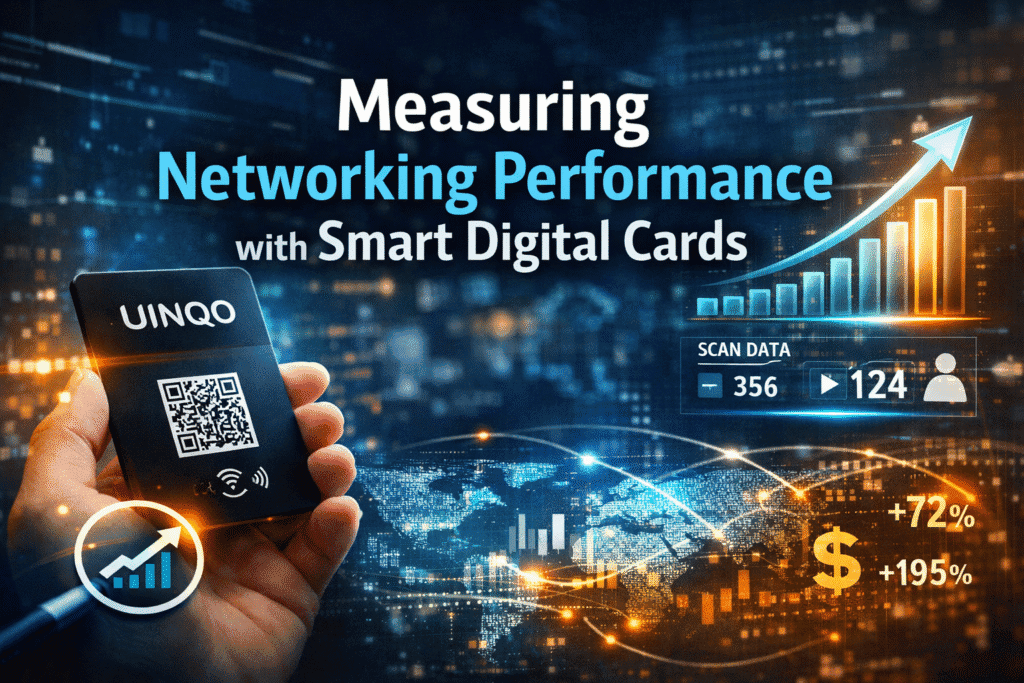
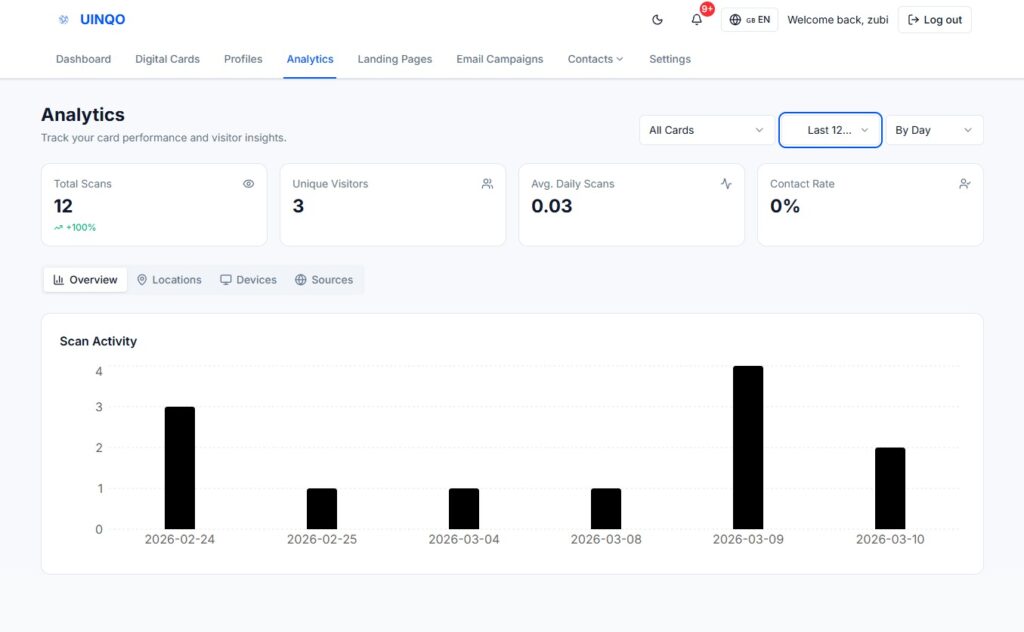
Digital business cards allow professionals to track how people interact with their profiles. Every time someone scans a QR code, taps an NFC card, or clicks a shared link, the platform records engagement data automatically. Additionally, you can track interactions through the analytics dashboard. The analytics dashboard provides insights into the performance and engagement of a digital business card. It helps users track how people interact with their card and measure networking effectiveness. The dashboard displays key metrics such as Total Scans, which shows how many times the card has been scanned through methods like QR codes or NFC; Unique Visitors, which counts the number of individual users who viewed the card; and Average Daily Scans, indicating the average number of scans received per day within the selected time period.
Another important metric is the Contact Rate, which represents the percentage of visitors who saved or interacted with the contact details. The dashboard also includes filters that allow users to analyze data by time period, specific cards, or daily trends. There are additional tabs such as Overview, Locations, Devices, and Sources provide deeper insights into where visitors come from, what devices they use, and how they accessed the card, helping users better understand and optimize their digital networking performance.
Instead of guessing which contacts are interested, businesses can see which individuals interacted with their profile the most. This helps prioritize follow-ups and ensures that time is spent on the most promising opportunities.
Analytics also help professionals understand which parts of their profile attract attention. For example, if visitors frequently click on a product demo or portfolio section, that signals strong interest in that specific offering.
Networking therefore becomes a measurable process rather than a guessing game.
Trade Show Networking
Consider a real-world example from trade show networking.
At large industry events, sales teams often meet hundreds of potential clients in a single day. Traditionally, they would distribute business cards and later attempt to manually follow up with the contacts they remembered.
Today, many companies use digital business cards instead. When someone scans the digital card, their interaction is recorded automatically. Sales teams can later review analytics to see which visitors explored their services or clicked on additional links.
“Studies show that companies using NFC-enabled digital business cards experience up to a 45% improvement in lead capture efficiency at trade shows” Source: Verified Market Reports. This improvement happens because digital cards eliminate manual data entry and capture engagement information instantly.
Instead of returning from an event with a pile of paper cards, businesses return with organized data that reveals which prospects showed genuine interest.
Freelancers and Consultants
Digital business cards are not just useful for large companies. Freelancers, consultants, and independent professionals are also benefiting from analytics-driven networking.
Imagine a freelance graphic designer attending a startup networking event. Instead of handing out printed cards, they share a digital business card that links to their portfolio.
Later, they can see exactly how many people viewed the portfolio and which projects attracted the most attention. If one potential client revisits the portfolio multiple times, that behavior suggests genuine interest. The designer can follow up with a personalized message referencing the project the client explored.
This type of insight dramatically improves the chances of turning a connection into a business opportunity. In fact, professionals using digital business cards are 70% more likely to share their contact information compared to those relying on paper cards, largely because the process is faster and more convenient.
Analytics and Marketing Insights
Another major benefit of digital business card analytics is the ability to connect networking activities with marketing performance.
Every interaction with a digital card provides information about how people engage with your brand. Over time, patterns begin to emerge. Businesses may discover that certain events generate higher engagement than others. They might also learn that specific types of content, such as product videos or case studies, attract the most attention.
This data can influence broader marketing strategies. For example, if most visitors click on a particular service page, that service might become a central focus in future campaigns. If social media links receive significant traffic, companies might invest more in those platforms.
Digital cards therefore become part of a larger ecosystem that includes marketing analytics, customer relationship management systems, and digital branding strategies.
In fact, about 45% of B2B sales teams now integrate digital business cards directly with CRM systems, allowing them to automatically capture leads and track engagement.
A Growing Global Market
The growing importance of digital business cards is reflected in the rapid expansion of the market.
The global digital business card market reached approximately $0.43 billion in 2026 and continues to grow as businesses embrace digital networking solutions. Adoption is particularly strong among startups, freelancers, and sales teams who rely heavily on networking to generate opportunities.
In Asia-Pacific, the market is expanding especially quickly as mobile-first professionals adopt digital tools for branding and communication. Another major factor driving adoption is sustainability. Organizations are increasingly seeking eco-friendly alternatives to paper products.
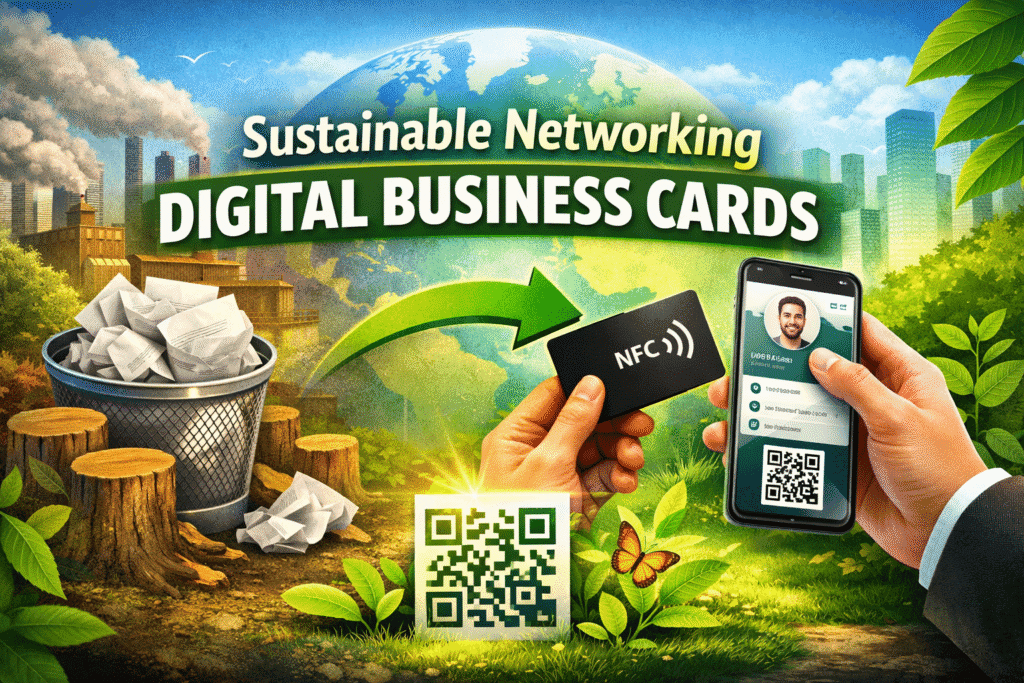
Switching to digital cards reduces paper waste and printing costs. Large companies can save thousands of dollars annually while also reducing their environmental footprint. A company with 10,000 employees, for example, could save over 125 trees and tens of thousands of gallons of water each year by replacing paper business cards with digital alternatives.
The Future of Analytics-Driven Networking
Looking ahead, the role of analytics in networking will continue to expand.
Artificial intelligence and machine learning are beginning to enhance digital business card platforms by analyzing engagement data and identifying patterns that humans might miss. In the near future, networking platforms may be able to predict which contacts are most likely to convert into clients based on historical interaction patterns.
For example, a system might analyze how frequently a contact views a profile, which resources they explore, and how quickly they respond to follow-up messages. Using this data, the platform could recommend the best time to reach out or suggest personalized follow-up messages.
These innovations will make networking more intelligent, efficient, and results-driven.
Why Analytics-Driven Networking Matters
In today’s competitive business landscape, relationships are more important than ever. However, building strong relationships requires more than just exchanging contact details. Professionals need insights that help them understand how people interact with their brand.
Smart analytics digital business cards provide those insights by turning every networking interaction into measurable data. Instead of relying on memory or guesswork, businesses can see exactly how their contacts engage with their profiles and which interactions are most valuable.
This ability to measure networking outcomes transforms what was once an informal activity into a strategic growth tool.
Unlocking the Hidden Power of Digital Business Cards
The true value of digital business cards lies in their ability to combine connection with intelligence.
Every scan, tap, or click tells a story about how people interact with your brand. When businesses analyze these interactions, they gain insights that can guide smarter decisions and stronger relationships.
Platforms like UINQO bring together digital business cards, NFC technology, dynamic QR codes, personalized profiles, and analytics-driven insights into one unified networking ecosystem. This combination allows professionals not only to share their identity but also to understand how their audience responds to it.
In the digital age, successful networking is no longer about collecting contacts. It is about understanding engagement, identifying opportunities, and building relationships that lead to measurable results.
As we move deeper into 2026, the businesses that thrive will be those that embrace analytics-driven networking and transform every connection into a meaningful opportunity for growth.
How UINQO Transforms Networking Data into Actionable Insights
Unlike basic digital business card platforms, UINQO turns networking interactions into meaningful business intelligence. Every scan, NFC tap, profile visit, link click, or contact save is tracked and organized into actionable insights. Users can see not only who interacted with their card, but also which sections of their profile drew the most attention and when. For instance, a marketing consultant sharing a UINQO card at a startup event can discover that 30 of 50 attendees viewed their profile, 18 clicked portfolio links. Analytics may also reveal peak engagement times, helping prioritize timely follow-ups. Patterns like repeated visits to specific portfolio items indicate strong interest, guiding personalized outreach. Over time, UINQO identifies broader trends, such as NFC taps outperforming QR scans, allowing professionals to refine their networking strategies.
By transforming interactions into structured data, UINQO ensures every connection drive smarter decision and measurable growth. Ready to turn every networking interaction into actionable insights? Explore UINQO today and see how your digital business card can drive measurable growth.