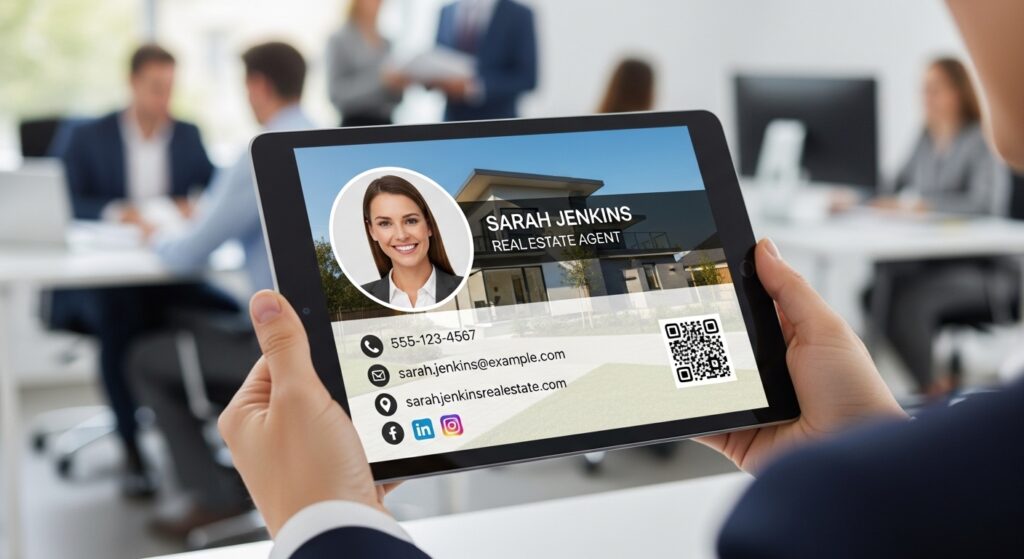
You had just wrapped up a virtual pitch call with an international client. You wanted to share his contact details quickly, but the old habit of emailing a PDF or fumbling with a scanned business card felt clunky and outdated. You imagined a world where a single tap or scan could instantly connect, update automatically with latest projects, and leave a lasting impression, no printing, lost cards, and wasted time. This is the reality of modern networking: fast, digital, and intelligent. Paper cards simply can’t keep up with today’s pace, where professional connections are formed and nurtured in real time.
Enter digital business cards, powered by technologies like QR code, NFC (Near Field Communication), and comprehensive digital identity management systems. These technologies are transforming how professionals connect, share information, and build relationships instantly, measurably, and without friction. The shift is real: as of 2026, 37% of businesses have adopted digital business cards, up from just 16% in 2020, with strong growth expected through this decade.
Among the innovators leading this transformation is UINQO, a platform that brings everything from instant contact exchange to smart identity management into one seamless digital ecosystem. UINQO isn’t just digitizing business cards, it is redefining professional networking for the digital era.
The Rise of Digital Business Cards
Digital business cards are no longer an emerging trend, they’ve entered the mainstream. After the disruption caused by the COVID‑19 pandemic, professionals and teams realized that traditional networking tools simply couldn’t keep up with the new way people meet, communicate, and collaborate. With most professionals carrying smartphones everywhere they go, digital sharing methods became a natural evolution of contact exchange.
By 2026, the global digital business card market is valued at around $220–$240 million and projected to grow steadily with double‑digit CAGR well into the 2030s. NFC business cards alone are seeing faster growth as they offer the premium experience of tap‑to‑share interactions. This adoption isn’t confined to tech startups. Freelancers, sales professionals, consultants, remote workers, and global teams are increasingly using digital cards because they work everywhere at live events, online meetings, or cross‑border collaborations. Unlike paper cards, which are often discarded or forgotten quickly, digital alternatives stay with recipients on their phones and are just a click or tap away whenever they’re needed. This fundamental shift in networking behavior underscores not just a preference for efficiency, but an expectation for real‑time, actionable connections.
Why Digital Business Cards Are Replacing Paper
At the heart of the digital adoption trend are several practical realities that paper cards simply can’t solve. Traditional business cards are static and limited to the moment they were printed. They can’t change when someone updates roles, adds social profiles, or wants to highlight a key project. Worse, research shows that a shocking 88% of paper business cards are thrown away within a week of being handed out.
Digital business cards solve these problems by living in the digital world, which is inherently flexible, persistent, and easy to update. If a professional change their job title, launches a new service, or rebrands their company, their digital card can reflect that instantly, no reprinting needed. This flexibility alone yields huge cost savings over time, eliminating recurring printing expenses and wasted inventory. Consider a consultant who attends multiple networking events each year. With digital cards, they can share their contact details and portfolio instantly with every new connection and receive insights into who viewed their profile and on which link they clicked, something paper cards could never offer.
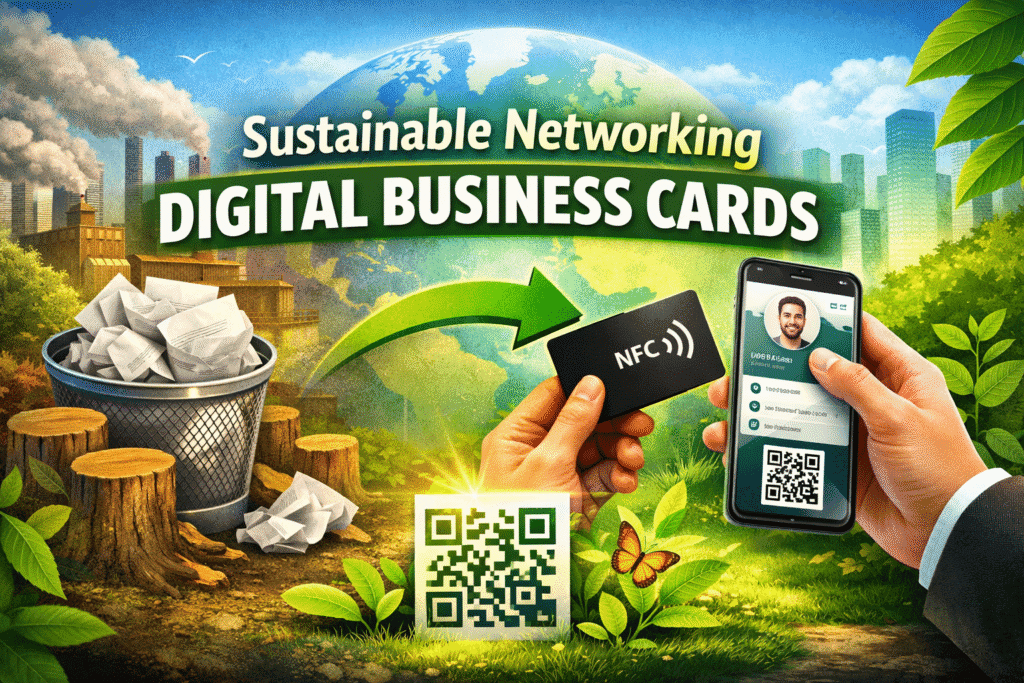
There’s also a strong sustainability advantage. With billions of business cards produced annually, the ecological footprint is significant. Digital cards reduce paper waste and the resources associated with printing that an increasingly important consideration for environmentally conscious professionals and organizations.
QR Codes vs NFC for Networking
In the world of digital contact sharing, QR codes and NFC are two dominant technologies and they each serve a purpose. Understanding the difference helps professionals choose the right tool for different networking scenarios.
QR codes are ubiquitous and instantly recognizable. They work on every smartphone because any camera can scan them without the need for additional apps. This universal compatibility makes QR codes ideal for situations where you’re networking with large numbers of people or when physical proximity isn’t guaranteed. When a QR code is scanned, it can direct the scanner to a personalized digital profile, phone number, website, or portfolio. Dynamic QR code, like those offered by UINQO, enhance this experience by enabling real‑time updates and analytics such as scan counts and click tracking, which help professionals understand engagement patterns.
NFC, on the other hand, works by enabling two devices to share information through a simple tap. Most modern smartphones (around 78% of devices shipped in 2024) support NFC meaning that a user can simply tap a card to their phone and instantly receive contact information. The experience feels instantaneous and premium which makes NFC especially powerful in face‑to‑face meetings, high‑impact presentations, or client pitches. Unlike QR codes, which require users to open their camera and align a scan, NFC works at a proximity level that often feels more natural in social interactions.
Together, these technologies create a complementary networking experience. Data from deployments across thousands of professionals shows that QR‑only solutions have about 92% adoption, NFC‑only about 78%, but hybrid QR + NFC solutions reach 96% adoption proving the value of offering both options.
UINQO leverages both. Its digital network solution ensures that no matter the device, environment, or user preference, professionals can share and receive contact information instantly eliminating compatibility friction and maximizing connection potential.
Digital Identity and Smart Profiles
Today’s professional identity goes far beyond a name and email. It includes social profiles, portfolios, work samples, industry affiliations, certifications, and even video content. The modern networking world demands that professionals represent who they are and what they do in rich, interactive ways.
This is where digital identity plays a key role. A digital identity isn’t just about having a presence online, it’s about managing that presence across platforms and contexts. UINQO empowers users to create personalized landing pages that act as the central hub for their professional identity. These landing pages can be customized for specific networking events, audiences, or objectives. For example, a UX designer might have a landing page that foregrounds a portfolio of work and case studies at one conference, and a streamlined contact‑plus‑LinkedIn view at another event, all while using the same digital card.
Such personalization does more than look good. It ensures that every connection made is meaningful and purposeful. When someone scans your QR code or taps your NFC card, they’re not just getting contact details, they’re getting context. They see your work, your voice, and your value proposition, all curated in a single, professional space.
This enhanced digital identity fosters trust and credibility in ways that static business cards never could. A contact who receives a beautiful digital card and explores a professional landing page is far more likely to remember and engage than someone handed a printed flyer with a phone number scrawled on it.
Contactless Networking
The modern workplace isn’t confined to boardrooms and business lounges anymore. With hybrid and remote work models, professionals are constantly meeting new contacts virtually and in physical spaces. Digital business cards, especially those powered by QR codes and NFC, make these interactions truly contactless.
Contactless networking isn’t just about hygiene that it’s about efficiency and speed. A salesperson at a trade show can instantly share their entire professional profile with a new lead in under a second. A startup founder presenting to investors can hand out one digital card that carries links to pitch decks, websites, and contact forms in a single scan. These moments save time and leave a digital trace that can be revisited later.
In scenarios where traditional business cards would be filed away, forgotten, or left unentered into contact lists, digital alternatives ensure that connections are captured instantly and stored where they’re most useful in digital devices and CRM systems that professionals use daily.
Smart Business Cards
The concept of a smart business card goes beyond just contact information, it’s an intelligent tool built for the connected age. These cards, like those offered through UINQO, combine aesthetic physical design with powerful backend functionality. Whether crafted in premium materials like metal or bamboo or entirely digital with QR and NFC functionality, smart business cards integrate seamlessly with professionals’ digital lives.
What makes a business card smart? It’s not the material alone. It’s the combination of features: instant tap‑to‑share, dynamic content updates, analytics, link forwarding, contact categorization, and digital identity management that all accessible from one place. In practice, this means that when a user shares their UINQO app, they’re not just giving away an address or phone number; they’re offering a gateway to a rich professional profile that evolves as they do.
Imagine a marketing manager attending a huge industry summit. Instead of handing out 100 paper cards that might never be entered into a device, she simply taps her UINQO’s metal card on each contact’s phone or lets them scan her dynamic QR code. Within minutes, she’s shared her digital profile that is an entire suite of professional links, and later, she can view analytics showing which connections engaged most with her profile, giving her actionable follow‑up insights.
AI Networking Profiles
As digital networking evolves, artificial intelligence is beginning to shape how we manage and optimize our professional presence. AI‑enhanced features can suggest relevant parts of a profile to highlight, recommend contact categorization, and even provide automated suggestions for follow‑up messaging based on real interaction patterns. While the underlying capabilities of AI in networking are still emerging, they point to a future where networking isn’t just reactive, it’s intelligent.
UINQO’s roadmap includes tools that incorporate predictive analytics and AI‑driven recommendations, helping professionals maximize the value of their connections without spending hours organizing or managing contact lists manually.
Smart Business Cards
UINQO’s smart business card solutions break the mold of legacy contact exchange. With digital cards that adapt, update automatically, and link to curated professional identities, UINQO turns every networking moment into an opportunity. Unlike paper cards that remain static, UINQO’s digital cards are alive, current, accessible, and memorable.
Real professionals already report that digital cards increase follow‑up rates, reduce networking friction, and make contact management far easier than ever before. With analytics and engagement data, users gain insights that help shape future networking strategies, a capability that paper cards could never offer.
Contact Management and Analytics
Networking isn’t just about making connections; it’s about maintaining them. Traditional networking tools fall short when it comes to follow‑up and organization. Paper cards end up in drawers, and contact details often never make it into address books or CRM systems.
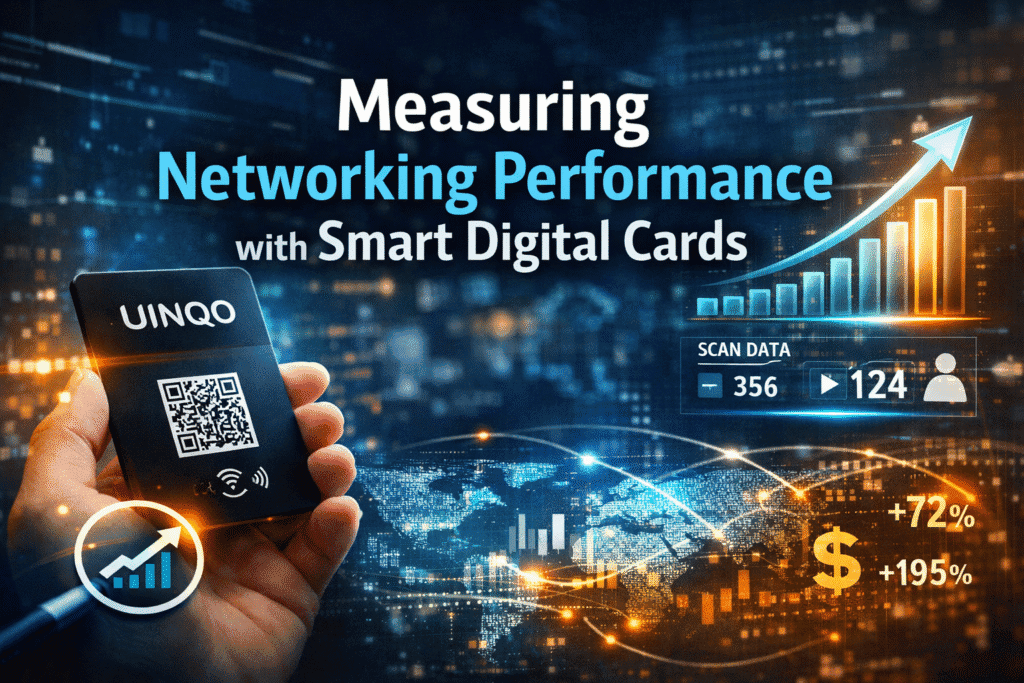
Digital tools like UINQO change that. By centralizing contact management, categorizing connections by industry or purpose, and offering Digital Business Card Analytics on who viewed or interacted with your profile, professionals gain a strategic advantage. They can prioritize follow‑ups, tailor messages, and track the reach of their networking efforts over time.
For example, a business development professional might notice that specific contacts from a recent conference clicked through to their portfolio multiple times. With this insight, they can craft a targeted follow‑up that speaks directly to those interests turning what would have been a forgotten paper card into a meaningful business opportunity.
Creative Customization
In networking, first impressions matter. UINQO embraces this truth with creative customization options such as Dimension Cards, which allow professionals to align the card’s visual look with their personal or brand identity. Whether it’s a sleek metal finish, eco‑friendly bamboo, or visually striking graphic designs, UINQO’s customization makes each card a reflection of the user’s professional brand.
This blend of aesthetics with digital functionality ensures that networking interactions leave a lasting impression, one that goes well beyond a name and phone number.
Future Trends in Digital Networking
Looking ahead, the networking landscape will continue to evolve rapidly. Several key trends are already shaping the path forward: Contactless Networking will become the norm, not the exception. As hybrid work and remote collaboration continue to rise, professionals will expect seamless ways to connect in both physical and virtual environments.
AI Networking Profiles will augment human insight, offering recommendations and personalized engagement strategies that help professionals build relationships more effectively. Smart Business Cards will increasingly become standard tools for teams and organizations, not just individual professionals. From sales teams to HR departments, these tools provide scalable, measurable networking solutions.
Through it all, platforms like UINQO will continue to lead the charge by integrating emerging technologies, offering analytics‑driven insights, and empowering professionals to build a powerful and dynamic digital identity.
Conclusion
The shift from paper business cards to digital networking tools isn’t just a trend, it’s a transformation driven by efficiency, sustainability, personalization, and intelligence. With technologies like QR codes, NFC, dynamic digital identities, and AI‑enhanced profiles, networking has become faster, smarter, and more impactful than ever before.
UINQO stands at the forefront of this evolution, offering a unified platform that simplifies contact sharing, enhances professional branding, and unlocks actionable insights from every interaction. In today’s world, where connections are digital first and engagement is everything, adopting smart networking tools isn’t just keeping up with trends, it’s setting them. When professionals embrace digital business cards and tools like UINQO, they are not just exchanging information, they are building the future of networking.
Frequently Asked Questions:
What is the future of networking with digital tools like QR codes and NFC?
How do QR codes and NFC enhance professional networking?
Can my digital identity change after sharing my card?
Yes, platforms like UINQO ensure your contact info, social links, and portfolios update automatically, keeping your professional identity current.