Professional networking once began with a handshake and the exchange of a small paper card, a ritual that defined first impressions for decades. That scene has evolved. Instead of reaching for paper, professionals share contact details instantly through digital business cards by using QR code or NFC taps making connections faster, smarter, and more aligned with how the modern world works.
Today’s professionals operate in a fast-paced, technology-driven environment where speed, organization, and accessibility matter more than ever. Carrying stacks of paper cards, worrying about running out during events, or sorting through dozens of contacts afterward can feel outdated and inefficient. In an era dominated by smartphones, cloud platforms, and instant communication, professionals expect networking tools that work just as quickly as they do.
This is where the digital business card has transformed the networking landscape. Instead of handing out static pieces of paper, professionals can now share their details instantly through NFC taps, QR code scans, or simple links. Contact information can be updated in real time, profiles can include videos and portfolios, and connections can be stored and managed automatically.
The debate between digital business cards and paper cards is no longer theoretical. It is already shaping how professionals’ network across industries. To understand which one truly wins in 2026, we need to examine their functionality, efficiency, sustainability, and real-world practicality.
What Is a Digital Business Card?
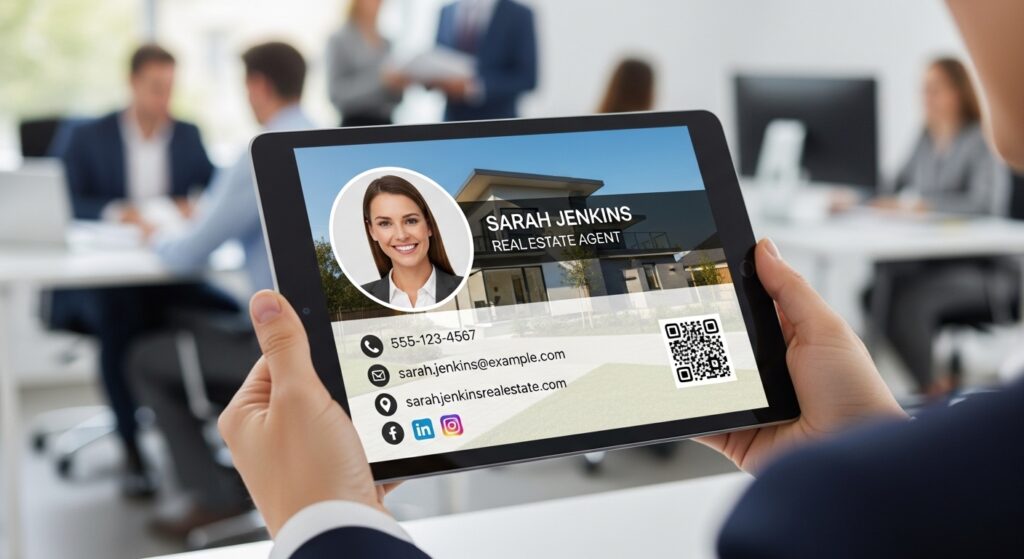
A digital business card is a modern alternative to the traditional printed card. Instead of printing contact details on paper, the information is stored digitally and shared through technologies such as NFC (Near Field Communication), QR codes, or web links.
When someone taps an NFC card against a smartphone or scans a QR code, they instantly access the digital profile of the person sharing it. This profile can include far more than basic contact information. It can feature social media links, websites, portfolios, videos, and downloadable contact files.
The biggest advantage of a digital business card is flexibility. If your phone number changes, your job title updates, or your company launches a new website, the information can be modified instantly without printing anything new. Every person who already received your card automatically has access to the updated version.
This makes digital business cards far more adaptable than traditional ones, especially in industries where roles and contact details change frequently.
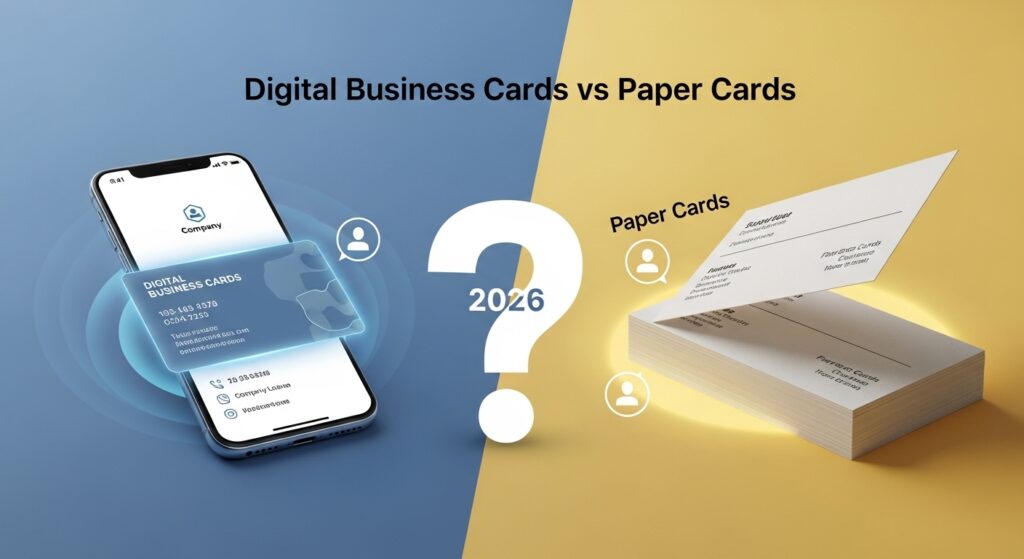
Digital Business Cards vs Paper Cards
The difference between digital and paper business cards goes beyond format. It reflects two completely different approaches to networking.
Paper cards are static. They present a fixed set of information printed on a physical material. While they can be beautifully designed, their functionality ends once they are handed over.
Digital business cards, on the other hand, function more like interactive networking tools. They allow professionals to share information dynamically, integrate with digital platforms, and track engagement.
Consider a real-world scenario. Imagine attending a large technology conference with hundreds of attendees. With paper cards, you might hand out dozens of copies and receive just as many in return. Later, you have to manually type those contacts into your phone or CRM system, assuming you don’t lose the cards first.
With a digital business card, the process becomes effortless. A quick tap or scan shares your profile instantly, and the contact can be stored automatically in your system. Instead of stacks of paper, you walk away with organized connections ready for follow-up.
Cost Comparison
At first glance, printing traditional business cards might seem inexpensive, but the costs add up quickly when you consider repeated printing, updates, and team scale. A batch of 500 standard paper cards usually costs between about $20 and $50, depending on quality and design. Premium options can reach $100–$250 or more for the same quantity. Many companies find they need to reorder cards multiple times a year whenever contact details change or they run out, which can push annual costs to $64.23 per employee on average when reprints, design, and shipping are included. For a 100‑person company, that adds up to roughly $6,400 every year on paper cards alone.
In contrast, digital business cards typically cost much less. Most platforms offer plans ranging from free basic accounts up to about $48 per user per year, even with advanced features. Because digital cards can be shared unlimited times, updated instantly, and stored in the cloud, businesses eliminate recurring printing and distribution expenses. This makes digital cards especially appealing for startups, growing companies, and professionals who change roles frequently saving significant money over time while gaining modern networking capabilities.
Networking Efficiency
Networking success is not just about exchanging contact details; it’s about maintaining and nurturing those connections afterward. Traditional paper cards create friction in this process. After events, professionals often spend hours manually entering contact information into their phones or CRM systems. Even then, mistakes can occur, and many cards end up forgotten in drawers or lost entirely. Digital business cards remove this barrier. Contact information can be stored automatically, categorized by context, and easily accessed later. Instead of spending time managing paper contacts, professionals can focus on meaningful follow-ups and relationship building.
For example, a sales professional attending an industry expo could meet dozens of potential clients in a single day. With digital networking tools, those contacts can be instantly organized and tagged for future communication. This level of efficiency transforms networking from a simple exchange of information into a structured relationship-building process.
Analytics and Tracking
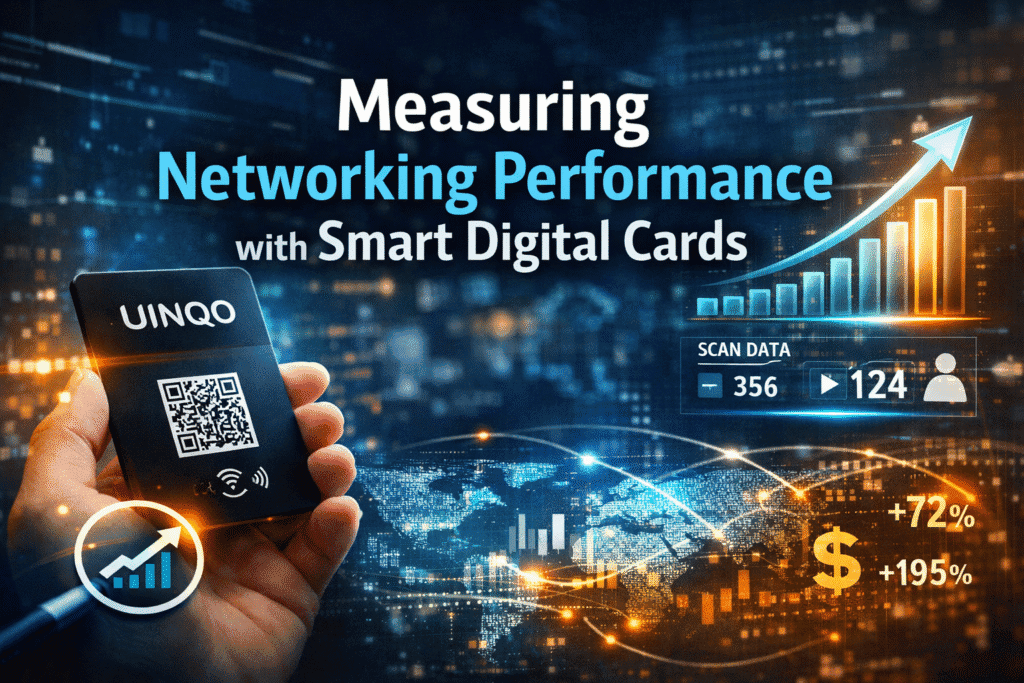
One of the most powerful capabilities of a digital business card is Digital Business Card Analytics, something that traditional paper cards simply cannot offer. With analytics built into digital card platforms, professionals can track detailed engagement metrics such as how many times their card was viewed, how often links were clicked, and what actions people took after interacting with the card. These insights help professionals understand how their network is responding to their profile.
For example, if a client views a portfolio link multiple times, that could indicate genuine interest. This kind of data helps professionals prioritize follow-ups and refine their networking strategies.
Paper cards offer no such feedback. Once they are handed over, there is no way to know whether they were saved, lost, or discarded.
Environmental Impact
The environmental impact of traditional business cards is often overlooked. Every year, billions of cards are printed worldwide, consuming significant amounts of paper, water, and energy.
Research suggests that approximately 8 billion business cards are printed annually, using around 1.4 million trees and billions of liters of water. Shockingly, nearly 90% of these cards are thrown away within a week of being received.
Paper production itself is resource-intensive. Manufacturing paper requires large amounts of water and energy, and the process contributes to deforestation and carbon emissions.
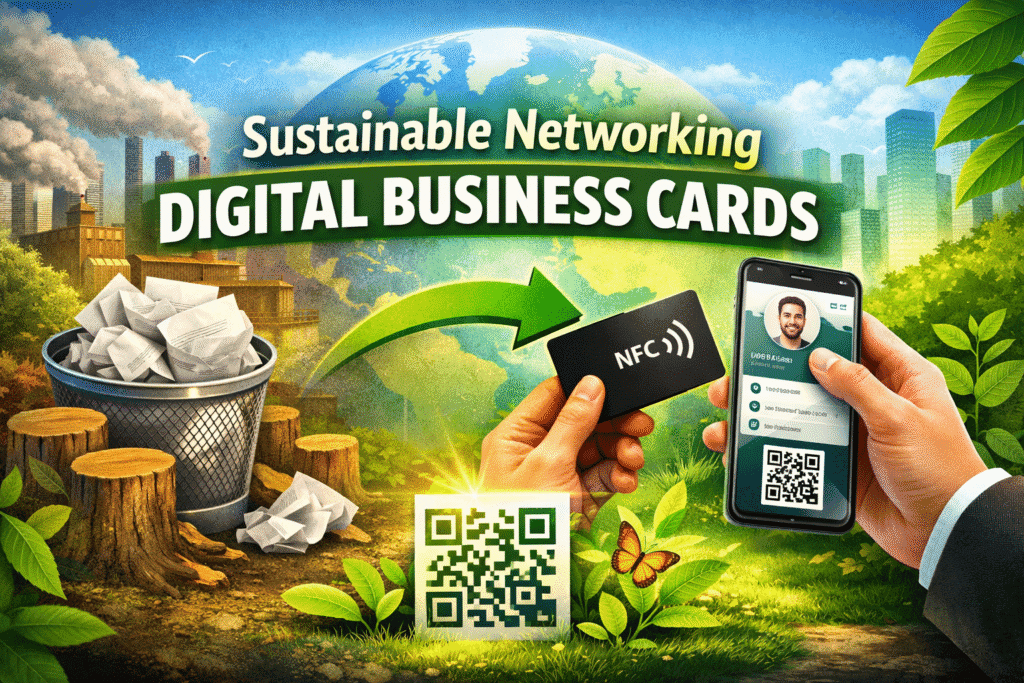
Digital business cards eliminate nearly all of these environmental costs. Because they exist entirely online, they require no printing, transportation, or physical materials. Studies suggest that switching to digital networking solutions can reduce carbon emissions related to business cards by up to 99% compared to traditional printed cards.
In an era where sustainability is becoming a priority for businesses and professionals alike, choosing digital networking tools reflects a commitment to environmentally responsible practices.
Sustainability Comparison Chart
One of the clearest ways to understand the environmental difference between paper and digital business cards is through a simple comparison of their carbon emissions, water usage, and waste generation.
Traditional printed business cards have a much larger environmental footprint because they require raw materials, manufacturing, printing, and physical distribution, all of which contribute to resource consumption and pollution. For example, a large company producing cards for thousands of employees can generate roughly 3,774 kg of CO₂ annually just from paper card production, printing, shipping, and disposal, along with consuming thousands of liters of water in paper manufacturing.
By contrast, digital business cards that exist electronically incur a tiny environmental cost approximately 3.6 kg of CO₂ per year for an equivalent volume of contact profiles, with minimal water and no physical waste involved. This dramatic contrast illustrates how much more sustainable digital cards are. While paper cards use finite resources and often end up in landfills shortly after being exchanged, digital business cards cut out deforestation, heavy water use, and most carbon emissions entirely, helping businesses significantly reduce their ecological footprint.
Why Businesses Are Switching to Digital Business Cards
Many companies are shifting to digital business cards because they fit today’s hybrid and global work environments. Digital cards can be shared instantly via QR code, NFC taps, email signatures, or virtual meetings, making networking smoother and more efficient in both physical and online settings.
This is especially important for sales teams and corporate professionals who attend multiple events and need fast, reliable contact sharing. For example, at trade shows or client meetings, professionals can display a QR code on a screen, allowing attendees to save contact details instantly without paper exchanges.
Digital business cards are also easily updated in real time, ensuring contacts always have the most current information without the recurring printing costs and waste associated with paper cards
When Paper Business Cards Still Make Sense
Despite the rapid growth of digital networking, paper cards have not completely disappeared.
In some traditional industries, such as luxury services, finance, or certain cultural business environments, a well-designed paper card can still convey prestige and professionalism. The tactile experience of a physical card sometimes leaves a memorable impression during face-to-face meetings. For example, a luxury real estate agent might use premium paper cards with embossed finishes to reflect the sophistication of their brand. Similarly, in certain international business cultures, exchanging physical cards remains part of professional etiquette.
However, even in these cases, paper cards are increasingly being used alongside digital profiles. Many professionals now include QR code on their printed cards, allowing recipients to access their digital contact page instantly.
The Future of Professional Networking
Looking ahead, the future of networking will likely combine physical and digital elements, but the core functionality will be digital.
As smartphones continue to dominate professional communication, features like NFC sharing, smart contact management, and real-time updates will become standard. Digital profiles will evolve into dynamic networking hubs that integrate with calendars, CRM systems, and social platforms.
Artificial intelligence may also play a role in the next generation of networking tools, helping professionals analyze their connections, identify opportunities, and maintain stronger relationships. In this environment, static paper cards will struggle to keep pace with the speed and complexity of modern networking.
Why Platforms Like UINQO Are Leading Digital Networking
Platforms like UINQO represent the next evolution of digital business cards. Instead of simply replacing paper with a digital profile, they transform networking into a comprehensive contact management system.
With UINQO, professionals can share their details instantly using NFC smart cards or dynamic QR code. Every connection is automatically organized and categorized, making follow-ups easier and more effective. UINQO also offers multiple profile options, allowing users to tailor the information they share depending on the context of the interaction. For example, a professional might have one profile for corporate networking events and another for personal collaborations.
Premium card options such as metal or eco-friendly bamboo materials add a physical element to the digital experience, while advanced features like Dimension Cards introduce interactive layers that capture attention instantly. These innovations turn the digital business card into far more than a replacement for paper. They make it a powerful networking tool designed for the modern professional.
The Verdict: Digital Business Cards Win in 2026
When comparing digital business cards and traditional paper cards, the conclusion becomes increasingly clear.
Paper cards still hold a certain nostalgic charm and can occasionally enhance a personal interaction. However, their limitations static information, environmental impact, and organizational challenges make them less practical in today’s fast-moving professional world. Digital business cards offer speed, flexibility, analytics, sustainability, and intelligent contact management. They allow professionals to share information instantly, maintain up-to-date profiles, and build stronger relationships through organized networking.
In 2026, networking is no longer just about handing someone a card. It is about creating meaningful connections that can grow over time. Digital business cards provide the tools to make that possible. The future of professional networking is digital, and professionals who adopt platforms like UINQO are positioning themselves at the forefront of this transformation.
Take your professional networking to the next level with UINQO. Start sharing your details instantly using smart NFC business cards and dynamic QR code, download now and experience the smarter way to connect.
Frequently Asked Questions:
What exactly is a digital business card?
How are digital cards more cost-effective than paper cards?
Can I track who viewed my digital business card?
Are digital business cards environmentally friendly?
Do paper cards still have value in 2026?
How do digital cards improve networking efficiency?
What makes UINQO stand out for digital networking?
UINQO combines smart NFC cards, dynamic QR codes, multiple profiles, and interactive features to transform simple contact sharing into comprehensive networking.