Imagine attending a networking event and meeting someone who could become an important business partner. Instead of handing over a small printed card that might later be forgotten in a wallet or drawer, you simply tap your phone or share a QR code. Within seconds, your contact details, website, and social profiles appear on their screen.
However, the modern business environment has evolved rapidly. Professionals now rely on smartphones, digital communication, and instant connectivity. Because of this shift, the traditional paper business card is gradually being replaced by a smarter and more dynamic alternative: the digital business card.
If you have recently heard about digital business cards but are unsure what they actually are or how they work, this guide will walk you through everything you need to know. From understanding the concept to learning the advantages and how to create one, this beginner-friendly guide explains the entire idea clearly and simply.
What Is a Digital Business Card
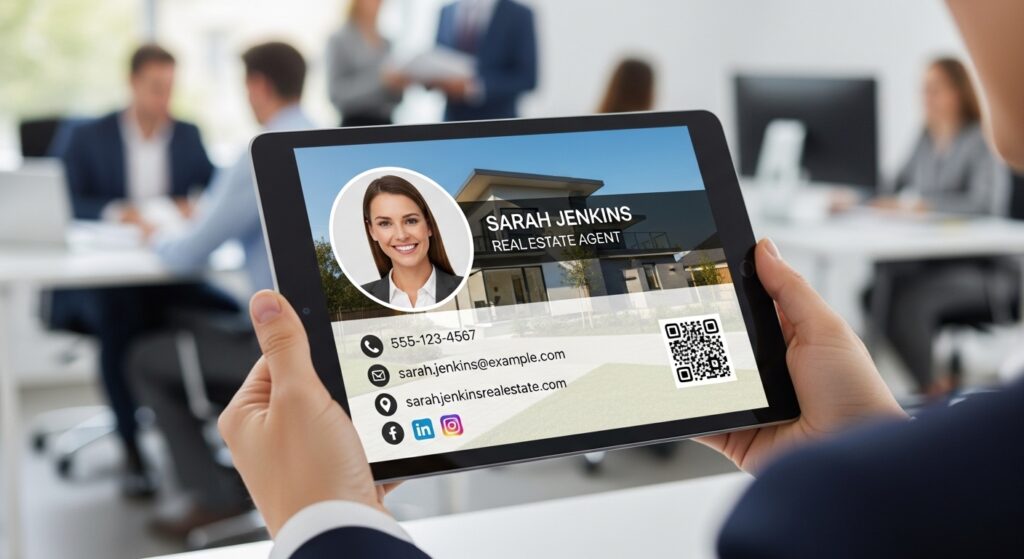
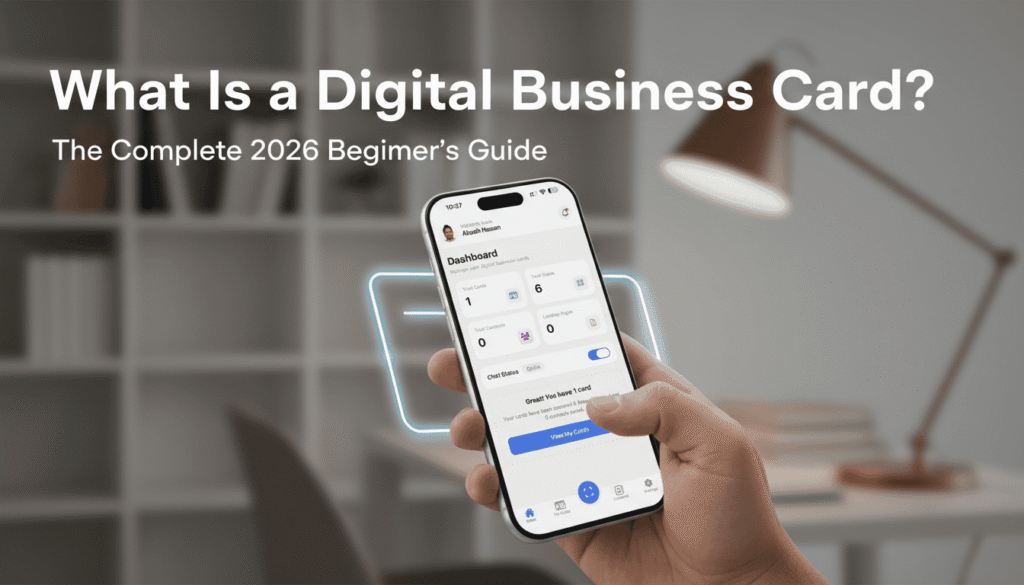
A digital business card is a modern, electronic version of the traditional paper business card. Instead of handing someone a printed card, you share your professional information digitally through a smartphone or web link. This digital profile typically contains your name, company, contact details, website links, and social media profiles in one accessible place.
Unlike paper cards that contain fixed information printed on physical material, a digital business card exists online and can be shared instantly. It allows professionals to present their contact details in a more interactive, flexible, and efficient way.
The main purpose of a digital business card is simple: to make networking faster, easier, and more organized. Instead of manually typing someone’s phone number or email into a phone, the recipient can simply tap a card, scan a code, or open a link to instantly access and save the contact information. Digital business cards are commonly shared using technologies like NFC or QR codes. These tools allow contact details to appear on another person’s smartphone within seconds, removing the friction of traditional networking.
In simple terms, a digital business card turns your professional identity into a dynamic online profile that can be accessed anytime and updated whenever necessary. Another important advantage is flexibility. If your phone number changes, you switch companies, or you launch a new website, you can simply update your digital profile. Everyone who accesses your card will always see the latest information without needing to reprint anything.
Because modern professionals operate in fast-changing environments, this ability to update information instantly makes digital business cards far more practical than traditional paper cards.
How Digital Business Cards Work
Understanding how digital business cards work is easier than most people expect. At the core, a digital business card is simply a personal profile hosted online that can be accessed through a smartphone. There are several common ways professionals share these digital profiles.
One of the most popular methods is NFC technology. NFC stands for Near Field Communication, which allows two devices to exchange information when they are placed very close together. When someone taps an NFC-enabled card against a compatible smartphone, the phone automatically opens a link that displays the digital business card profile.
This process takes less than a second and does not usually require the recipient to install any special applications. The smartphone simply detects the NFC signal and opens the profile in the web browser. Another widely used method is QR code. A QR code is a type of two-dimensional barcode that can store a link or digital information. When someone scans the QR code using their phone camera, it instantly opens the digital business card profile associated with it.
Both NFC and QR technologies achieve the same result: instant sharing of professional details without typing or manual data entry. Once the profile opens, the recipient can view your information and interact with it directly. They can save your phone number, send an email, visit your website, connect on social media, or even schedule a meeting depending on the features included in the profile.
Many digital business card platforms also allow users to download the contact details as a vCard file. A vCard is a standard digital contact format used in smartphones and email systems to store personal information like phone numbers, email addresses, and URLs. Because everything happens digitally, the interaction feels fast, seamless, and convenient. This simplicity is one of the main reasons digital business cards are becoming increasingly popular in modern networking.
Benefits of Digital Business Cards
Digital business cards offer a wide range of advantages compared to traditional paper cards. These benefits extend beyond convenience and help professionals build stronger and more efficient networking systems. One of the biggest advantages is instant sharing. Instead of handing someone a card and hoping they keep it, you can share your details immediately through a tap or scan. This reduces the chances of losing contact information and ensures that connections are saved directly on a device.
Another key benefit is the ability to update information instantly. Paper business cards become outdated whenever your job title, phone number, or company changes. With digital cards, you can simply edit your profile and your updated information will be available to everyone who accesses your card.
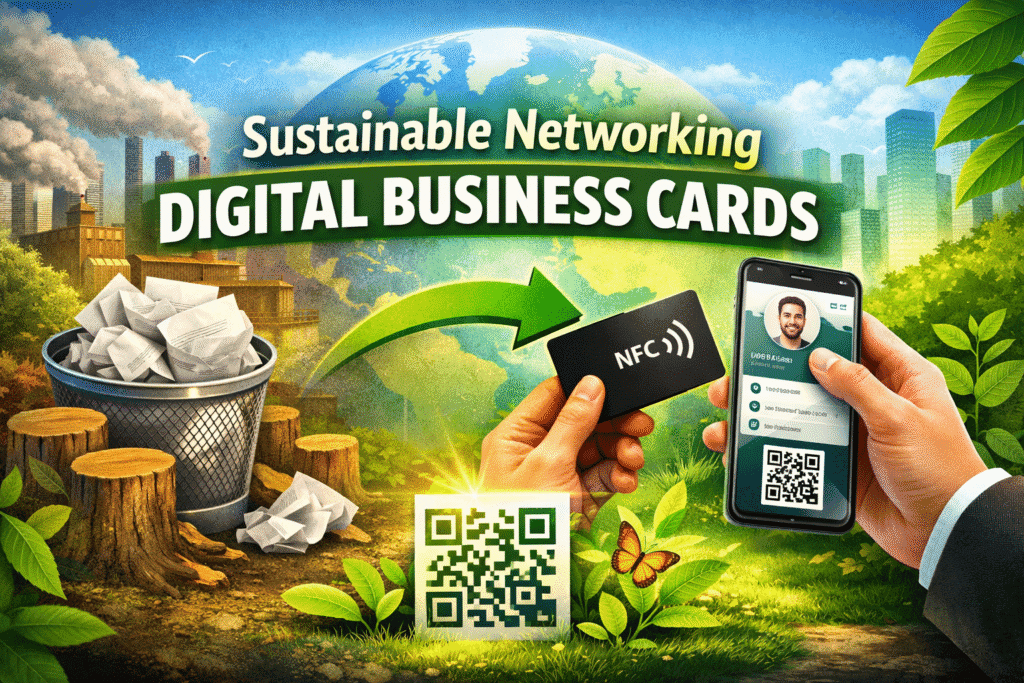
Digital business cards also provide a richer networking experience. A traditional card only contains limited information due to its small size. A digital profile, on the other hand, can include websites, portfolios, videos, social media links, and appointment scheduling options. This transforms a simple introduction into a more engaging and informative experience. Another important advantage is sustainability. Every year billions of paper business cards are printed worldwide, and many of them are discarded shortly after being received. Digital business cards eliminate the need for paper printing, making them a more environmentally friendly solution.
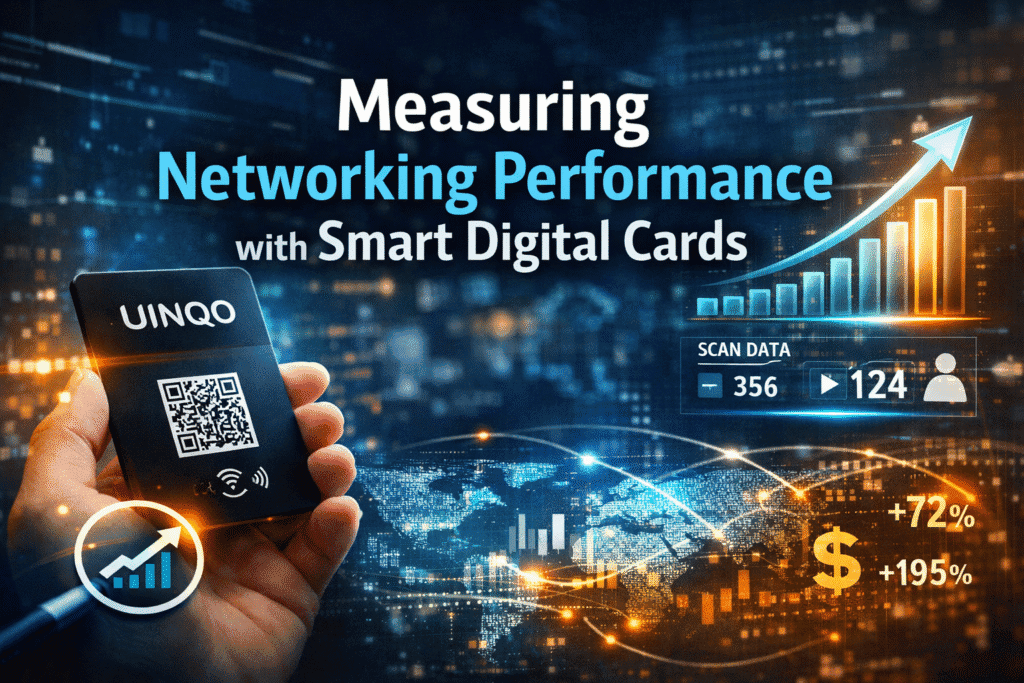
Digital cards also support analytics and tracking in many cases. Professionals can see how often their card is viewed, which links people click, and how networking interactions are performing. These insights allow users to measure engagement and optimize their networking strategy. From an organizational perspective, digital cards also help manage contacts more effectively. Instead of collecting dozens of paper cards that may be misplaced later, digital connections can be stored automatically in a contact management system. This means networking becomes more strategic and structured rather than random and unorganized.
Overall, the advantages of digital business cards go far beyond replacing paper. They represent a more intelligent approach to building and maintaining professional relationships.
Digital Business Card vs Paper Business Card
To understand why digital business cards are gaining popularity, it helps to compare them with traditional paper business cards. Paper cards have been used for decades because they are simple and tangible. Handing someone a printed card during a meeting feels familiar and professional. However, this traditional method has several limitations in today’s digital-first world.
First, paper cards are static. Once they are printed, the information cannot be changed. If your job role changes or your company rebrands, you must print new cards to reflect the updates. Second, paper cards are easily lost. After conferences, meetings, or networking events, many people end up with stacks of cards that they may never revisit. In fact, a significant number of paper cards are discarded shortly after being received.
Another challenge is manual data entry. When someone receives a paper card, they must type the contact details into their phone or CRM system. This process takes time and often results in errors or incomplete entries. Digital business cards solve these issues by allowing instant sharing and direct contact saving.
Instead of manually typing information, the recipient can access your full profile within seconds. This reduces friction and makes networking smoother and more efficient. Digital cards also offer richer communication opportunities. A printed card might contain only a phone number and website, while a digital profile can include social media profiles, booking links, service descriptions, and multimedia content.
However, some professionals still prefer hybrid solutions that combine physical cards with digital functionality. For example, smart cards like those offered by UINQO, including premium Metal cards, eco‑friendly Bamboo cards, and creatively designed Dimension cards provide a tangible, high‑quality feel while also unlocking a digital profile with just a tap or scan. These NFC‑enabled cards maintain the familiar physical experience of handing over a card but instantly open a dynamic online profile that shares comprehensive contact details. This hybrid approach bridges traditional networking and modern technology, giving professionals the best of both worlds: a memorable physical impression plus seamless digital connectivity.
Ultimately, the main difference lies in flexibility and functionality. Paper cards represent static information, while digital cards create interactive, evolving professional profiles.
Global Statistics on Digital Business Cards in 2026
In 2026, the adoption of digital business cards has reached notable levels around the world, reflecting the broader shift toward digital networking and contactless communication. Approximately 37% of businesses globally now use digital business cards, more than double the rate from 2020, when only about 16% had adopted them. Technology companies are leading this trend, with adoption rates as high as 72%, while nearly 23% of individuals also use digital cards for professional networking and personal branding.
The market for digital business cards is growing rapidly, with industry reports estimating its value at hundreds of millions of dollars and projecting continued expansion as more professionals embrace digital alternatives to paper. These trends underline how digital cards are becoming mainstream in corporate and individual networking practices.
How to Create a Digital Business Card
Creating a digital business card today is easier than ever. Thanks to modern networking platforms and tools like UINQO, professionals can build and share digital profiles within minutes, customize them with rich contact details, and organize connections smarter than ever before. UINQO combines smart sharing features such as dynamic QR code and NFC technology with intuitive contact management, making the process of creating, updating, and distributing your professional information seamless and efficient in today’s digital networking environment
The first step is choosing a platform or service that allows you to create your digital profile. Many tools provide customizable templates where you can add your name, company details, contact information, and branding elements.
Once the platform is selected, you typically create a profile page that represents your professional identity. This page acts as your digital business card and can include information such as your phone number, email address, website, social media links, and portfolio. Many platforms also allow you to personalize your card by adding your company logo, brand colors, images, and short descriptions about your services or expertise.
After setting up your profile, the platform usually generates a unique sharing method. This might include an NFC-enabled card, a QR code, or a simple shareable link. The NFC card allows you to tap the card against someone’s phone to instantly open your profile. The QR code works as an alternative for devices that do not support NFC, allowing anyone to scan the code and access your digital card. Some platforms also integrate contact management features, allowing you to organize connections, track interactions, and manage your networking relationships more effectively.
Once your digital business card is created, you can begin sharing it in meetings, conferences, networking events, or even casual introductions. Because your card exists online, it remains accessible anytime and can evolve as your career grows.
The Future of Professional Networking
The way professionals connect is changing rapidly as technology continues to shape modern communication. Networking is no longer limited to exchanging printed cards and hoping someone remembers your details later.
Digital business cards represent the natural evolution of professional introductions in a connected world. By combining instant sharing, interactive profiles, and smart contact management, digital cards transform simple introductions into meaningful connections. Instead of being a disposable piece of paper, your business card becomes a living professional profile that grows alongside your career.
Platforms like UINQO are helping drive this transformation by simplifying communication and amplifying connections through modern networking tools. With NFC business cards, dynamic QR codes, and organized contact management systems, professionals can connect faster and build stronger relationships. The future of networking is not about printing more cards. It is about creating smarter ways to connect, communicate, and collaborate.
Ready to upgrade the way you connect professionally? Download UINQO App today and experience the smarter way to share your professional identity through NFC business cards and dynamic QR technology.