In the early days of building a startup, every conversation matters. A simple introduction can evolve into a partnership, an investor meeting, a new customer, or even a future co-founder. Founders operate in a fast-moving environment where opportunities appear quickly and disappear just as fast. In this reality, the traditional paper business card is beginning to feel outdated. It is static, limited in the amount of information it can contain, and surprisingly easy to lose.
This shift in how people connect is one of the reasons founders around the world are embracing digital business cards. For startups, the transition is not simply about replacing paper with technology. It is about creating a faster, smarter, and more scalable way to share professional identity.
UINQO is leading this transformation by combining smart NFC business cards, dynamic QR code, personalized landing pages, Multiple Profiles, and organized contact management into one networking ecosystem. Instead of relying on fragile paper cards, founders can share an interactive digital profile that reflects their brand and evolves as their company grows.
According to market research from Grand View Research, the global virtual cards market was valued at about USD 19.02 billion in 2024 and is expected to reach USD 60.06 billion by 2030, growing at a CAGR of about 21.2%. The growth of remote work, startup ecosystems, and digital-first communication has accelerated this shift even further.
For startups trying to build relationships quickly and make memorable first impressions, digital business cards are becoming a strategic advantage rather than a novelty.
Startup Networking Challenges
Networking is one of the most critical activities for founders, but it is also one of the most chaotic. Startup leaders constantly move between investor meetings, conferences, pitch events, and client discussions. During these interactions, exchanging contact information should be seamless. Unfortunately, traditional methods often create friction.
Paper business cards have several limitations in modern networking environments. They require printing, they cannot be updated, and they often end up misplaced or forgotten. A founder might distribute dozens of cards at a conference, but there is no guarantee that recipients will remember to manually enter the information later.
Real-world startup events illustrate this problem clearly. At major tech conferences such as Web Summit or TechCrunch Disrupt, founders meet hundreds of people in just a few days. Many attendees return home with stacks of business cards that eventually get lost in bags, drawers, or desks. Valuable connections disappear simply because the information was never transferred into a digital system.
There is also the issue of context. A paper card provides only a name, phone number, and perhaps a website. It does not communicate the story behind the startup, the product vision, or the founder’s personal brand. In an ecosystem where storytelling and credibility are essential, this limitation can reduce the impact of an otherwise strong introduction.
Digital networking tools were created to solve exactly these challenges. Instead of relying on physical cards, founders can share a digital business card through an NFC tap or a dynamic QR code. The recipient immediately receives a structured profile that includes contact information, social media links, company details, and even booking options.
UINQO makes this experience even smoother by allowing founders to organize new contacts automatically with Smart Contact Management feature. Rather than collecting cards and sorting them later, connections are stored digitally from the beginning. This eliminates confusion and ensures that every interaction has the potential to become a meaningful relationship.
Digital Business Cards vs Paper Cards
To understand why digital business cards are gaining momentum in the startup world, it is useful to compare them directly with traditional paper cards.
Paper business cards have been used for decades because they are simple and tangible. Handing someone a physical card during a meeting has long been considered a professional gesture. However, the modern business environment is increasingly digital. After meeting someone, people usually search for them online, check their LinkedIn profile, visit their company website, or save their contact details directly into their phone.
In this digital-first environment, the limitations of paper cards become clear. Once printed, they cannot be edited. If a startup changes its branding, phone number, or website, the entire batch of cards becomes outdated. This often leads to repeated printing costs and unnecessary waste.
Digital business cards, by contrast, provide real-time flexibility. Founders can update their information instantly without replacing their card. The next person who scans the QR code or taps the NFC card automatically sees the latest details.
This difference becomes especially valuable in the startup world where companies pivot frequently. A founder might change their product focus, add a new service, or update their contact channels within months. Digital cards adapt to these changes seamlessly.
Another key difference lies in the depth of information. Paper cards offer limited space, while digital profiles allow founders to present a full professional identity. They can include company introductions, product links, social platforms, portfolios, and scheduling tools.
UINQO takes this concept further by providing personalized landing pages that act as a digital hub for professional identity. Instead of simply sharing a phone number, founders can present a well-designed page that communicates who they are, what their startup does, and how others can engage with them. This shift transforms a simple exchange of contact details into a richer networking experience.
Benefits of Digital Business Cards for Founders
For startup founders, the advantages of digital business cards extend far beyond convenience. These tools support faster networking, stronger branding, and better relationship management.
One of the most important benefits is instant sharing through NFC or QR code technology. When a founder meets someone at an event, they can simply tap their smart NFC card on the recipient’s phone or allow them to scan a QR code. Within seconds, all contact details appear on the screen.
This speed matters in environments where founders may meet dozens of people in a short period. Instead of writing down information or manually typing phone numbers, the entire process becomes automatic. Another benefit is real-time updates. Startups evolve quickly, and digital business cards ensure that contact information stays accurate without additional printing costs. A single card can last for years while the information behind it continues to evolve.
Cost efficiency is another factor that attracts early-stage companies. High-quality printed cards, especially those with premium designs, can be expensive when reordered frequently. Digital cards eliminate these recurring expenses while offering far more functionality.
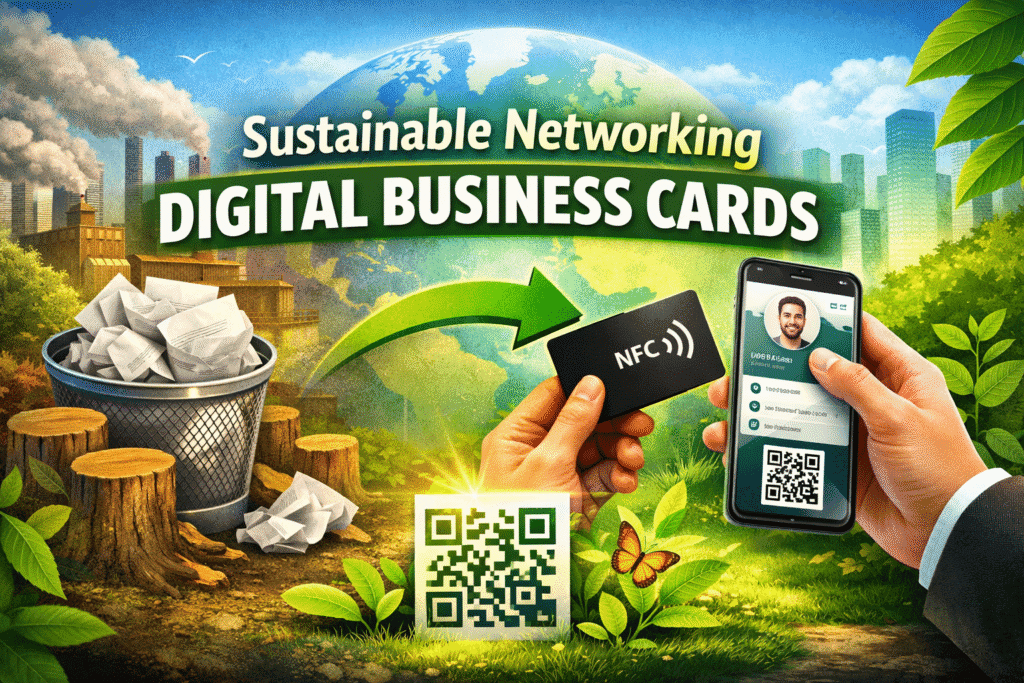
Sustainability also plays an important role. According to research from Adobe, billions of paper business cards are printed each year, and a large percentage are discarded within days. Digital alternatives significantly reduce paper waste, aligning with the environmental values that many modern startups prioritize. UINQO supports these benefits with premium NFC card options such as metal and bamboo cards. These materials combine durability with an elegant appearance, allowing founders to maintain the physical experience of handing over a card while unlocking the power of digital networking.
Digital Networking in Action
The impact of digital business cards can already be seen in real startup communities around the world. Consider a founder attending a technology conference in Singapore. During a networking session, they meet potential investors, developers, and marketing partners. Instead of distributing dozens of paper cards, the founder shares their NFC card. Each recipient taps their phone and instantly receives a digital profile containing company information, social links, and a calendar booking option for follow-up meetings.
This small interaction dramatically increases the likelihood of continued communication. Instead of hoping the recipient remembers to enter the information later, the contact is already saved digitally.
Another example comes from the startup accelerator environment. Founders participating in accelerator programs such as Y Combinator or regional incubators often meet mentors and partners daily. Digital business cards allow them to present updated company milestones, product demos, and investor decks directly through their profile links. In both scenarios, the ability to share a dynamic professional profile creates a more memorable interaction than a simple printed card.
How to Implement Digital Business Cards in a Startup
Adopting digital business cards is surprisingly simple, especially when using platforms designed specifically for professional networking.
The first step is creating a digital profile that represents the founder and the startup. This profile typically includes contact details, company information, social media links, and relevant resources such as portfolios or product pages. Once the profile is ready, it can be linked to a smart NFC card or a dynamic QR code. When someone taps the card or scans the code, the profile opens automatically on their device.
Platforms like UINQO simplify this entire process. Founders can design their digital profile, manage contacts, and update information from a single dashboard. The system also supports multiple profile options, allowing users to tailor their presentation depending on the context of the meeting. For example, a founder attending an investor pitch event might highlight funding goals and company metrics. At a developer conference, they might focus on product features and partnership opportunities. This adaptability ensures that the right message reaches the right audience.
Better Networking Analytics
Startups thrive on data, and networking is no exception. One of the most powerful advantages of digital business cards is the ability to track engagement. Traditional networking methods provide almost no measurable feedback. A founder might distribute dozens of paper cards but never know how many people actually used the information.
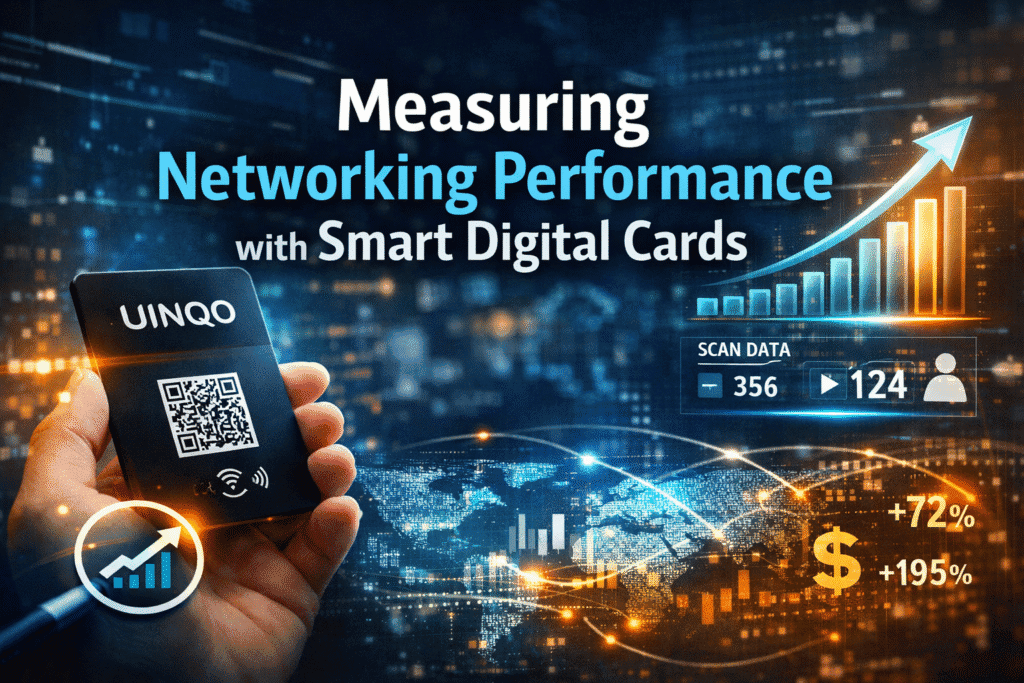
Digital business cards introduce analytics into this process. Founders can see how often their profile is viewed, which links are clicked, and which channels generate the most engagement. These insights help entrepreneurs understand which events, partnerships, or introductions produce the best networking results. Over time, this data allows founders to refine their networking strategies just as they would optimize marketing campaigns.
UINQO integrates these Real-Time Card Analytics directly into its platform, turning networking into a measurable and strategic activity rather than a guessing game.
Lower Cost Than Paper Cards
Cost efficiency is another major reason startups are switching to digital business cards. Printing traditional cards may seem inexpensive at first, but the costs accumulate quickly when information changes or new team members join. Startups often go through multiple branding updates in their early stages, which means printing new batches repeatedly.
Digital business cards remove this recurring expense. A single NFC card can last for years, and the information behind it can be updated unlimited times. When combined with the additional benefits of analytics, customization, and digital contact management, the long-term value becomes clear. For early-stage startups working with limited budgets, investing in a flexible networking tool is often far more practical than maintaining stacks of printed cards.
How Digital Business Cards Help Startup Growth
At its core, networking is about building relationships. For startups, these relationships can directly influence growth. A well-timed introduction might lead to an investment opportunity. A casual conversation at an industry event could evolve into a strategic partnership. Even a brief meeting with a potential customer can become the foundation of long-term revenue.
UINQO simplifies modern networking by providing a single platform with Powerful Networking Features to design digital profiles, manage contacts, and share information instantly. Users can create multiple profiles within one account and switch between them depending on the context, ensuring the right presentation for meetings, events, or client pitches. Profiles can include widgets such as services, portfolios, galleries, and experience, with customizable designs that match personal or brand identity. A single QR code keeps information updated and easily shareable.
UINQO also offers contact management, analytics to track engagement, targeted email follow-ups, professional email signatures, customizable landing pages, smart contact categorization, branded SMTP infrastructure, and seamless sharing through Google and Apple Wallet.
The ability to organize contacts into categories such as investors, clients, and collaborators also makes follow-up communication more strategic. Instead of relying on memory or scattered notes, founders can manage their network in a clear and structured system. Over time, this organized approach to networking becomes a powerful growth engine for startups.
Conclusion
The transition from paper to digital business cards reflects a broader transformation in how startups operate. Modern founders prioritize speed, adaptability, data, and brand experience. They understand that small efficiencies in daily interactions can create significant advantages over time. Digital business cards align perfectly with this mindset. They enable instant sharing through QR codes or NFC taps, eliminate printing costs, allow real-time updates, and provide analytics that reveal how networking efforts perform.
UINQO make this transition even more powerful by combining smart NFC cards, personalized landing pages, multiple profile options, and organized contact management into a single ecosystem. For startups navigating a competitive landscape, the ability to connect quickly and leave a lasting impression can make a meaningful difference. Networking is no longer just about exchanging names and phone numbers. It is about building a dynamic professional identity that grows alongside the company.
As more founders recognize these advantages, digital business cards are rapidly replacing traditional paper cards. What was once a simple networking tool is now becoming a strategic asset for modern entrepreneurship. For startups looking to connect smarter, share professionally, and build stronger relationships, the shift to digital business cards is not just a trend. It is the future of networking.