Networking today happens across conferences, online communities, social platforms, and digital ecosystems where speed and accessibility matter more than ever. In this environment, the traditional paper business card increasingly feels like a leftover from another era. Professionals now expect connections to be instant, information to be dynamic, and communication to flow seamlessly across devices. This is why the smart digital business card is rapidly becoming the standard tool for modern networking.
For decades, paper business cards served an important purpose. They were a tangible reminder of a meeting, a quick way to exchange contact details, and a symbol of professional identity. But the modern business landscape demands more than a static piece of paper. Today’s professionals need tools that are adaptable, sustainable, and integrated with the digital platforms they already use every day. Solutions such as UINQO represent this shift by transforming the simple concept of a business card into a powerful digital networking platform.
The Environmental Reality Behind Paper Business Cards
One of the most compelling reasons behind the decline of paper business cards is their environmental impact. Every year, an estimated 7 billion business cards are printed globally, according to industry research from the printing sector. While that number reflects the scale of professional networking, it also highlights a significant sustainability issue. Studies suggest that around 88 percent of paper business cards are thrown away within a week of being received, meaning billions of cards quickly become waste.
Producing paper cards also requires natural resources that are becoming increasingly scarce. Paper manufacturing relies heavily on wood pulp, which contributes to deforestation and ecosystem degradation. The World Wildlife Fund reports that roughly 40 percent of industrial wood harvested globally is used for paper production, making the industry a major contributor to forest loss. In addition to trees, paper manufacturing consumes large amounts of water and energy. According to environmental assessments of the paper industry, producing a single ton of paper can require more than 20,000 gallons of water.
In a world where sustainability is no longer optional but expected, handing someone a disposable paper card can unintentionally send the wrong message. Businesses and consumers alike are becoming more environmentally conscious, often preferring to work with organizations that demonstrate genuine environmental responsibility. A networking tool that reduces waste while embracing modern technology reflects a forward-thinking mindset.
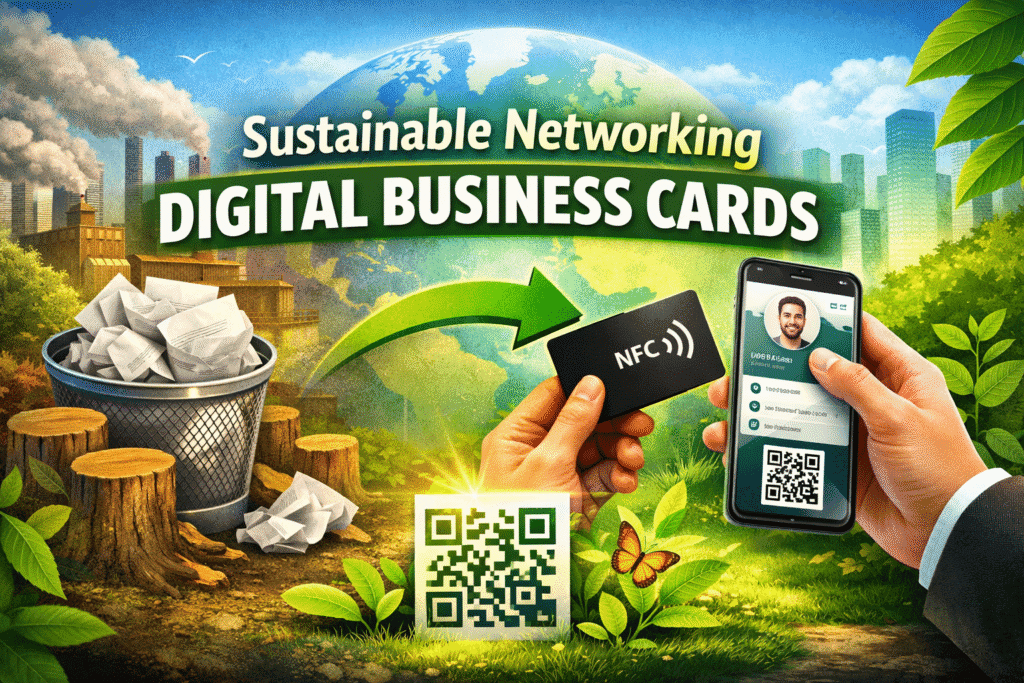
Smart digital business cards address this issue by dramatically reducing the need for repeated printing. Instead of distributing hundreds of disposable cards each year, professionals can rely on a single smart card or digital profile that updates automatically. Some digital networking solutions also use durable materials such as bamboo or metal, ensuring that the physical component of the card lasts for years instead of minutes.
The Problem with Static Information
Another major limitation of paper business cards is that they contain static information. A printed card represents a fixed snapshot of a person’s professional identity at a specific moment in time. However, careers today are more fluid than ever. Job roles change, phone numbers are updated, businesses pivot, and professionals expand their portfolios with new achievements.
Consider the example of a startup founder attending a technology conference. After distributing several hundred paper cards that list their current company role, the founder may pivot the business model or rebrand the company only a few months later. Suddenly, every card that was handed out becomes outdated. The contact information may still work, but the messaging no longer reflects the reality of the business.
With a smart digital business card, information can be updated instantly. Instead of reprinting stacks of cards, professionals simply update their digital profile. Anyone who previously saved or accessed that profile automatically sees the latest information. This dynamic capability ensures that a professional’s identity remains accurate and relevant at all times.
The advantage becomes even clearer when professionals manage multiple roles. Many entrepreneurs, consultants, and freelancers operate across several industries simultaneously. A single static card cannot capture the complexity of those professional identities. Digital profiles allow users to present multiple versions of themselves depending on context, whether they are attending a corporate meeting, a creative event, or a startup pitch session.
Real-World Networking Challenges
To understand the limitations of paper cards, consider a typical networking event scenario. Imagine attending a large technology conference with hundreds or even thousands of participants. During the course of a day, professionals might exchange dozens of cards. Each card represents a potential collaboration, client relationship, or partnership opportunity.
However, once the event ends, the real challenge begins. Those cards are often placed in a pocket, bag, or desk drawer. Days later, the professional may struggle to remember the context behind each card. Was this person a potential investor? A developer interested in collaboration? Someone met briefly during a coffee break? Without context, the value of those connections quickly fades.
Many professionals intend to manually enter the information into their phone contacts or customer relationship management systems. In practice, this rarely happens consistently. The task becomes tedious, especially when multiple cards accumulate over time. As a result, many valuable contacts are never properly recorded.
Digital networking tools remove this friction entirely. When someone taps a smart digital business card using near-field communication (NFC) technology or scans a QR code, the contact information can instantly appear on their phone. In many cases, the details can be saved directly into their contact list without any manual typing. This small technological shift transforms the networking experience by ensuring that valuable connections are preserved rather than forgotten.
Data and Measurable Networking
Modern businesses rely heavily on analytics to measure performance. Marketing campaigns, social media engagement, and website traffic are all carefully tracked to understand what strategies work best. Yet traditional paper business cards offer no measurable data whatsoever.
Once a card is handed out, there is no way to know what happens next. Did the recipient keep the card? Did they visit the company’s website? Did the interaction lead to a business opportunity? Without measurable insights, professionals cannot evaluate whether their networking efforts are effective.
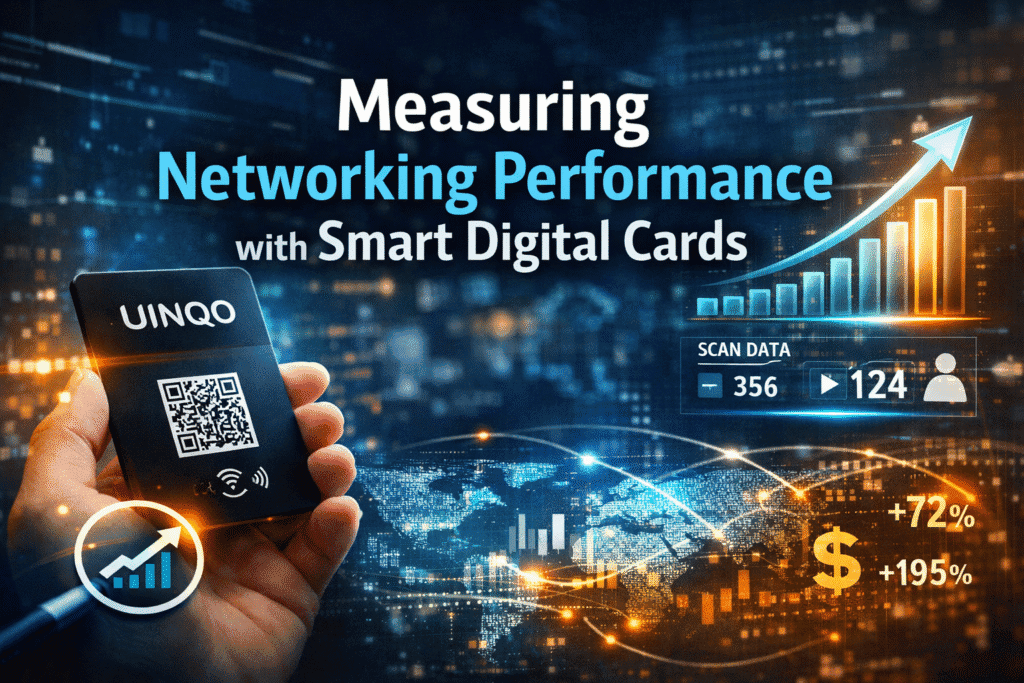
Smart digital business cards introduce a level of visibility that paper cards simply cannot provide. Many digital platforms offer analytics that show how often a profile is viewed, which links are clicked, and when interactions occur. This information can help professionals understand which events generate the most engagement and which connections are most likely to convert into business opportunities.
For example, a sales professional attending multiple industry events could compare engagement data from different conferences. If one event generates significantly more profile visits or meeting requests, that insight can guide future networking strategies. This data-driven approach aligns with the broader shift toward measurable business outcomes.
Creating Memorable First Impressions
Despite the rise of digital technology, physical experiences still matter in professional interactions. The act of exchanging something tangible can create a memorable moment that reinforces a connection. However, the physical element of networking has evolved beyond simple paper.
High-quality materials such as bamboo or metal smart cards provide a unique tactile experience that immediately captures attention. Instead of handing someone a disposable card, professionals present an object that feels durable, distinctive, and thoughtfully designed. This physical quality signals professionalism and attention to detail.
Consider a consultant meeting a potential client during a networking event. Instead of offering a standard paper card that looks similar to dozens of others, the consultant presents a sleek metal card that activates a digital profile with a quick tap. The moment stands out because it combines design, technology, and convenience in a single interaction.
First impressions often influence how professionals perceive each other. A modern networking tool that demonstrates innovation can reinforce a brand’s image as forward-thinking and technologically savvy.
Integration with the Digital Ecosystem
Another key limitation of paper business cards is that they exist outside the digital tool’s professionals rely on every day. A traditional card might contain a website address or social media handle, but accessing those resources requires additional steps. The recipient must manually type the URL or search for the profile online.
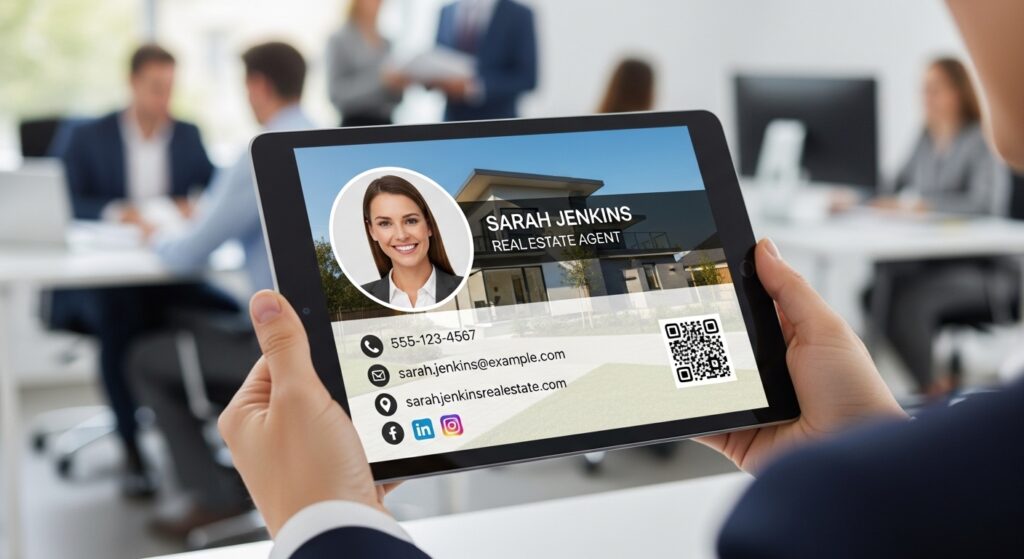
Smart digital business cards eliminate this extra friction by connecting directly to a comprehensive digital profile. Instead of simply displaying contact details, the profile can include links to portfolios, social media platforms, presentation videos, booking calendars, and messaging channels.
Imagine a marketing consultant meeting a potential client at an industry event. After exchanging a digital card, the client can immediately view the consultant’s recent projects, watch case study videos, and schedule a consultation through an integrated booking system. This seamless experience significantly shortens the path from introduction to collaboration.
Speed is increasingly important in modern business relationships. The faster a connection can move from initial contact to meaningful interaction, the greater the chance of building a productive partnership.
The Cultural Shift Toward Digital Networking
The decline of paper business cards is also driven by broader cultural changes. Younger professionals entering the workforce are digital natives who expect most interactions to happen through mobile devices. For many of them, exchanging paper cards feels outdated compared to tapping phones or sharing digital profiles.
During that period, many professionals became accustomed to scanning QR code, as the rapid QR code adoption during the COVID-19 pandemic accelerated contactless interactions. Many professionals became accustomed to scanning QR code, using mobile payment systems, and sharing digital information instantly. These habits have persisted even as in-person events returned.
Digital networking tools align perfectly with these evolving expectations. They offer convenience, hygiene, and efficiency while supporting the fast-paced communication style of modern professionals.
A Future-Proof Approach to Professional Identity
Ultimately, the shift toward smart digital business cards reflects a broader transformation in how professional identity is presented and shared. Instead of relying on static printed materials, professionals now manage living digital profiles that evolve alongside their careers.
These profiles act as gateways to an entire professional ecosystem. They connect contacts to social media channels, project portfolios, online communities, and communication tools. Rather than representing a single moment, they provide a continuously updated representation of a person’s expertise and achievements.
For businesses, this transformation also supports better relationship management. Teams can track leads more effectively, maintain accurate contact databases, and follow up with prospects in a timely manner. What once required manual processes can now happen automatically through integrated digital platforms.
The End of an Era
The traditional paper business card served the professional world for more than a century. It was a simple, practical solution for sharing information in a time when digital communication did not exist. But as technology reshapes the way people connect, the limitations of paper are becoming increasingly clear.
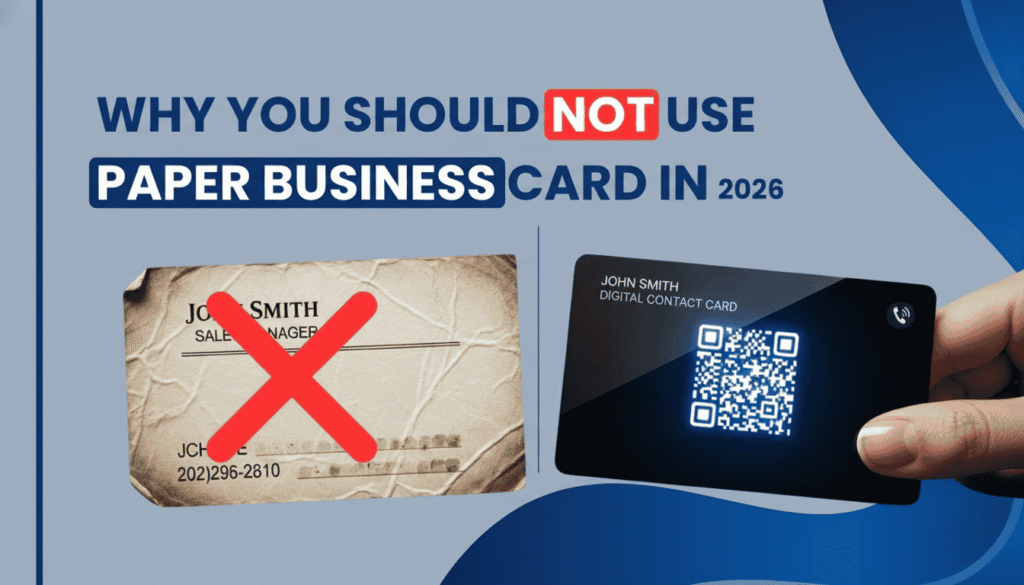
In 2026, professionals are seeking tools that combine sustainability, efficiency, and digital connectivity. The smart digital business card represents exactly that evolution. By eliminating unnecessary waste, enabling instant updates, and integrating seamlessly with modern communication platforms, it transforms the simple act of exchanging contact details into a powerful networking experience.
The future of networking is not about collecting stacks of paper cards that may never be used again. It is about building meaningful connections supported by technology that keeps those relationships alive. Professionals who adopt digital networking tools are not just following a trend; they are embracing a smarter, more sustainable way of doing business.
Frequently Asked Questions:
How does an NFC business card share my details?
An NFC card uses a small wireless chip to transmit your Personalized Landing Page to a smartphone with a simple tap. It eliminates manual typing and ensures your contact information is saved instantly and accurately into the recipient’s phone without requiring any third-party apps.
What happens if I change my phone number or job title?
Unlike paper, you never need to reprint your cards; you simply update your details via the UINQO dashboard. Your physical Metal or Bamboo card will instantly reflect these changes, ensuring your network always has access to your most current professional information.
Can I share different information with different people?
Yes, you can utilize Multiple Profile Options to tailor your digital business card for different audiences. You can switch between a corporate profile for formal meetings and a creative portfolio for social events, ensuring you always make the most relevant impression.
Is a digital card compatible with older smartphones?
Every smart card includes a dynamic QR code as a reliable backup for older devices. If a phone doesn’t support NFC, the user can simply scan the code with their camera to instantly access your contact details and social links.
How do I keep track of the people I meet?
Through Smart Contact Category and management tools, you can organize new connections into specific groups immediately after a meeting. This replaces the messy stack of paper cards with a clean, searchable digital database that simplifies your follow-up process.