Professional networking has dramatically changed over the past decade. What once relied on printed business cards, handwritten notes, and rolodexes is now evolving into an intelligent ecosystem where digital interactions matter more than ever. As global opportunities grow, first impressions count for seconds, and relationships require ongoing attention, professionals need tools that help them connect instantly, stay organized, and nurture meaningful connections over time.
At the heart of this evolution are three transformative technologies: Near Field Communication (NFC), dynamic QR code, and Artificial Intelligence (AI). Together, these tools are reshaping the way professionals share their identity, engage with contacts, and elevate the value of every relationship.
For companies like UINQO, a startup based in Almada, Portugal, this shift isn’t just a trend it’s the foundation of a new ecosystem where communication is simplified and connections are amplified.
In this article, we’ll explore why networking had to evolve, how these technologies work in real world scenarios, and why the future of networking is digital, intelligent, and dynamic.
Why Traditional Networking Was No Longer Enough
For decades, paper business cards served as the universal handshake of professional introductions. They were tangible, familiar, and easy to exchange. But the professional world today moves too fast for static tools. Traditional cards are easily misplaced, quickly outdated, and provide no insights into how connections are used or engaged with after an event.
Today’s professionals are spread across virtual meetings, industry events, and remote work environments. A digital identity that can move with them, not stuck in someone’s wallet or notebook has become essential. Traditional cards do nothing to help people stay organized, follow up on leads, track engagement, or understand which connections matter most.
According to recent market insights, 37% of businesses in 2026 use digital business cards, compared to just 16% in 2020, showing rapid adoption of digital alternatives to paper cards. This rise reflects a broader recognition that networking is no longer about handing out cards, it’s about creating a centralized, efficient system for continuous relationship management.
Even more striking, digital business cards equipped with NFC and QR technology are now commonplace: QR code scans reached over 41 million in 2025, a 433% increase over four years, while more than 126 million NFC business cards were in use worldwide by the end of 2024. These numbers clearly show the tipping point at which digital networking has become mainstream.
Modern professionals aren’t looking for another app or tool, they want solutions that let them share their identity instantly, keep contacts organized, and learn more about how connections evolve over time.
NFC: The Technology Transforming First Impressions
Near Field Communication (NFC) might not be a household term for everyone, but it’s rapidly becoming a standard part of the networking toolkit. NFC enables devices and tags (such as smart cards) to communicate by simply tapping them together. This means that professionals can share their detailed contact profiles and links with just a tap of a card or smartphone.
Imagine you’re at a conference. You meet a potential client or partner, and instead of fumbling for a paper card or typing information into a phone, you simply tap your NFC card to their device. Instantly, they receive your full professional profile: contact details, portfolio, social links, and more.
This eliminates tedious manual typing and removes barriers between introductions and meaningful follow-ups. Unlike paper cards, NFC cards can hold complex profiles and even be updated at any time. If a professional changes role, updates their portfolio, or adds new links, the card continues delivering current data without needing a redesign or reprint.
For example, a freelance graphic designer might use their NFC card to instantly share a link to a video portfolio, social media profiles, and client testimonials all with one tap. NFC transforms what used to be a static business card into a living digital identity that evolves with the professional.
Professionals also value the physical impression NFC cards make. Premium materials like metal or bamboo create a memorable tactile experience that underscores quality and professionalism something paper cards simply can’t match.
Dynamic QR Codes: Expand Your Reach Everywhere
While NFC is ideal for in‑person exchanges, QR code extend networking into digital and remote spaces. QR code are already ubiquitous, you see them in payment systems, restaurant menus, and product packaging but their potential for professional networking is only just being realized.
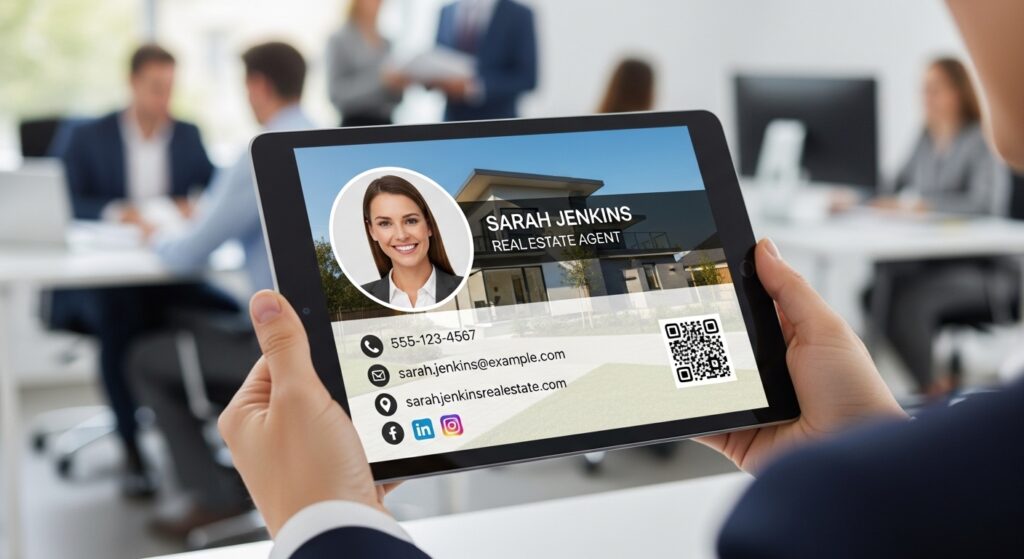
Dynamic QR code link a scanning device to a live digital profile that can be updated in real time. This means a professional can create multiple profiles for different contexts: one for client meetings, another for speaking engagements, or even one tailored for recruiters. When someone scans the QR code, they instantly see the most relevant version of a professional’s identity.
QR codes are extremely versatile. They can be embedded in email signatures, presentation slides, LinkedIn profiles, and physical office signage. They can even be printed on products, packaging or event badges by turning every interaction into a networking opportunity.
Additionally, QR codes are measurable. Platforms integrating QR code analytics can track how often a profile is scanned, where scans are happening, how often users interact with links, and which content resonates most with an audience. This data turns networking into a strategic, measurable process rather than a guessing game.
For example, a startup founder presenting at a pitch event might display their dynamic QR code on a slide. Attendees scan it to instantly save the founder’s contact information, view the startup’s pitch deck, and connect on social platforms all without a single paper card exchanged.
This flexibility combined with the universal accessibility of a camera scan that makes QR code an indispensable tool for remote and hybrid networking.
AI: Turning Contacts into Strategic Connections
Even with NFC and QR codes eliminating friction in capturing contact information, professionals still face the enduring challenge of managing and leveraging large networks. That’s where Artificial Intelligence (AI) comes in.
AI helps professionals organize, interpret, and act on their networking data intelligently. Traditional contact lists often become cluttered, unorganized, or forgotten. AI solves this by automatically categorizing contacts based on data like industry, interaction patterns, or business goals.
For instance, AI might identify which contacts are most frequently engaging with your profile, cluster new connections by relevance, or suggest follow‑up reminders based on your communication patterns. Rather than simply storing thousands of contacts, AI turns them into a strategic asset.
Imagine a consultant who has attended multiple industry events and received hundreds of digital business card interactions. An AI‑powered platform can analyze engagement patterns to highlight the most promising leads those who opened the profile multiple times, clicked through to the consultant’s portfolio, or scanned a QR code more than once. This makes follow‑ups more meaningful and personalized.
Beyond organization, AI provides analytics that reveal trends in your network: what industries you’re most connected with, which connections have the highest potential impact, and where there might be gaps. Through Digital Business Card Analytics, these insights transform networking from a static collection of names and phone numbers into a data-driven strategy.
Practically speaking, AI might automate follow‑up suggestions, recommend timely check‑ins, or even draft personalized messages. This level of intelligence ensures that professionals remain engaged with their network without manual effort.
A Unified Ecosystem: The Power of Integration
What truly sets modern platforms like UINQO apart is the ability to unify NFC, QR code, and AI into one seamless ecosystem. Instead of using multiple disconnected tools: an NFC card from one provider, a QR code generator from another, and a separate CRM, professionals can leverage a single system to manage every aspect of networking.
UINQO combines NFC cards, dynamic QR codes, personalized landing pages, and AI‑driven contact management into one integrated platform. This means professionals no longer switch between apps to network, organize contacts, and track engagement everything happens inside one ecosystem.
For example, after receiving a connection via NFC or scanning a QR code, a professional’s profile is automatically logged and categorized. AI can then analyze engagement, prioritize follow‑ups, and help the user craft personalized messages. Over time, the platform learns which connections are most valuable, making future networking even more strategic.
UINQO also embraces customization, allowing professionals to reflect their personal or corporate brand through dynamic landing pages and custom card designs. This brings professionalism and personality together crucial in a world where a brand identity matters just as much as the contact information itself.
Examples from Everyday Networking
Consider a few real scenarios where these technologies make a difference:
A startup founder attends a tech conference. Instead of distributing 200 paper cards, the founder carries an NFC card that instantly transfers their contact details, pitch deck link, and social profiles with a single tap. After the event, the AI in their networking platform highlights the most engaged contacts and suggests personalized follow‑up messages.
A consultant embeds a dynamic QR code in their webinar slides. Attendees scan it to save contact information, view service packages, and schedule discovery calls. Analytics from the QR code reveal which segments of the audience engaged most deeply by helping the consultant tailor follow‑up content.
An agency executive updates their digital profile mid‑year with new awards, case studies, and service offerings. Because the profile is linked to both NFC cards and QR codes, every contact saved by others instantly reflects the updated information without reissuing cards.
What once required multiple tools, spreadsheets, and manual effort now happens automatically and intelligently.
The Broader Market Trends Behind Digital Networking
The shift to digital networking isn’t just anecdotal data shows it’s a real, measurable trend with long‑term momentum. The global digital business card market is projected to exceed $680 million by 2035, growing at a steady rate. Meanwhile, smartphone NFC capabilities have rapidly increased, with 78% of smartphones shipped in 2024 equipped with NFC chips that’s making tap‑to‑share interactions widely accessible.
Digital cards also outperform traditional methods in engagement and retention: recipients are 55% more likely to retain contact information from digital cards compared to paper ones, and cards embedded with QR codes achieve 19% higher engagement.
These statistics show that professionals and businesses are not only experimenting with digital networking, they’re adopting it at scale.
The Future Is Digital, Intelligent, and Sustainable
Networking in the 21st century is no longer about exchanging static pieces of paper, it’s about creating dynamic, data‑driven professional identities that adapt as careers evolve. NFC, QR codes, and AI together create a networking experience that’s seamless, measurable, and strategic.
As professionals embrace these technologies, they gain more than convenience, they gain a competitive edge. Instant sharing builds stronger first impressions. Dynamic profiles connect more deeply. AI insights turn relationships into strategic opportunities.
UINQO is leading this transformation by offering a unified solution where every interaction matter, every contact is actionable, and every professional can build a living network, not just a list. Learn more about UINQO’s approach here: https://uinqo.com.
Technology doesn’t replace human connection, it enhances it, making every exchange more meaningful, efficient, and impactful. Whether you’re an entrepreneur, a consultant, or a corporate executive, the future of networking is digital first, intelligently organized, and rooted in real‑time engagement.