In today’s digital-first business environment, networking is no longer limited to exchanging paper cards at conferences. It has evolved into a continuous, technology-driven process of building, nurturing, and converting professional relationships. Yet, many professionals still lose valuable opportunities because they approach networking with outdated methods and avoidable mistakes.
If your connections are not turning into clients, partnerships, or referrals, the problem might not be your service. It might be your networking strategy. As a Portugal-based startup focused on transforming professional connections, UINQO, understands how small networking errors can quietly cost businesses real revenue.
Let’s explore the top networking mistakes that may be holding you back and how to fix them strategically.
1 Treating Networking as a One-Time Event
One of the biggest misconceptions about networking is that it ends when the event ends. Many professionals exchange contact details and assume the relationship will naturally grow from there. In reality, networking is not a transaction; it is a process.
Failing to follow up within 24 to 48 hours significantly reduces the chance of converting a contact into a client. Consistent engagement, whether through personalized messages, email outreach, or LinkedIn interaction, keeps you top of mind. Modern networking tools make this easier by centralizing contacts and automating reminders, ensuring no opportunity slips through the cracks.
2 Relying on Paper Business Cards in a Digital World
Traditional paper business cards often get lost, damaged, or forgotten. Even worse, they require manual data entry, which creates friction and delays communication.
Today’s professionals expect instant access to digital information. Smart NFC business cards and dynamic QR code eliminate this barrier by allowing real-time data sharing directly to a smartphone. With platforms like UINQO, your digital profile, social links, portfolio, and contact details are accessible in seconds, no typing required. In a competitive environment, speed equals advantage.
3 Sharing Incomplete or Outdated Information
Nothing undermines credibility faster than outdated contact information. A wrong phone number, inactive social profile, or missing website link can cost you trust before the conversation even begins.
Networking tools must be dynamic, not static. Digital solutions allow you to update your information in real time without reprinting cards. Whether you change job titles, phone numbers, or service offerings, your shared profile should reflect your most current professional identity.
4 Not Having a Clear Value Proposition
Many professionals introduce themselves without clearly explaining what problem they solve. Generic introductions like “I work in marketing” fail to create impact. Clients want clarity, not confusion.
Effective networking requires a defined value proposition supported by structured digital profiles. A personalized landing page that outlines services, expertise, and achievements makes your introduction concrete. When someone scans your NFC card or QR code, they should immediately understand who you help and how.
5 Ignoring Contact Organization
Collecting contacts without organizing them is like generating leads without a CRM system. Eventually, you forget who is who, what they do, and where you met them.
Smart contact categorization and digital contact management systems prevent this chaos. Organizing contacts by industry, priority, event source, or potential value ensures targeted follow-ups and meaningful engagement. Without structure, networking becomes random. With structure, it becomes strategic.
6 Focusing on Quantity Over Quality
Many professionals assume that networking success is defined by how many contacts they collect at an event. However, simply gathering dozens of names rarely leads to real business growth. Meaningful conversations create stronger impressions and build trust, which increases the likelihood of future collaboration.
Instead of trying to connect with everyone, focus on engaging deeply with individuals who align with your goals or target market. With UINQO, you can organize and categorize the contacts you collect, making it easier to identify high-potential leads and follow up strategically through email, phone, or LinkedIn for better long-term results.
7 Failing to Personalize Your Professional Presence
In a crowded marketplace, generic branding makes you invisible. If your networking materials look like everyone else’s, you blend in instead of standing out.
Creative customization matters. From metal and bamboo smart cards to dimension-based designs, visual differentiation enhances memorability. A well-designed digital profile aligned with your brand identity reinforces professionalism. First impressions are often digital now, make sure yours reflects your expertise.
8 Neglecting Mobile Optimization
Most networking interactions happen on smartphones. If your shared profile or website is not mobile-friendly, you lose attention immediately.
A personalized landing page optimized for mobile ensures smooth browsing, quick loading, and easy saving of contact information. Technical performance plays a direct role in client perception. Slow or poorly formatted pages suggest inefficiency, even if your services are excellent.
9 Not Tracking Networking Performance
Many professionals invest time and money in events but never measure results. How many contacts converted? Which event generated the highest ROI? Without data, improvement is impossible.
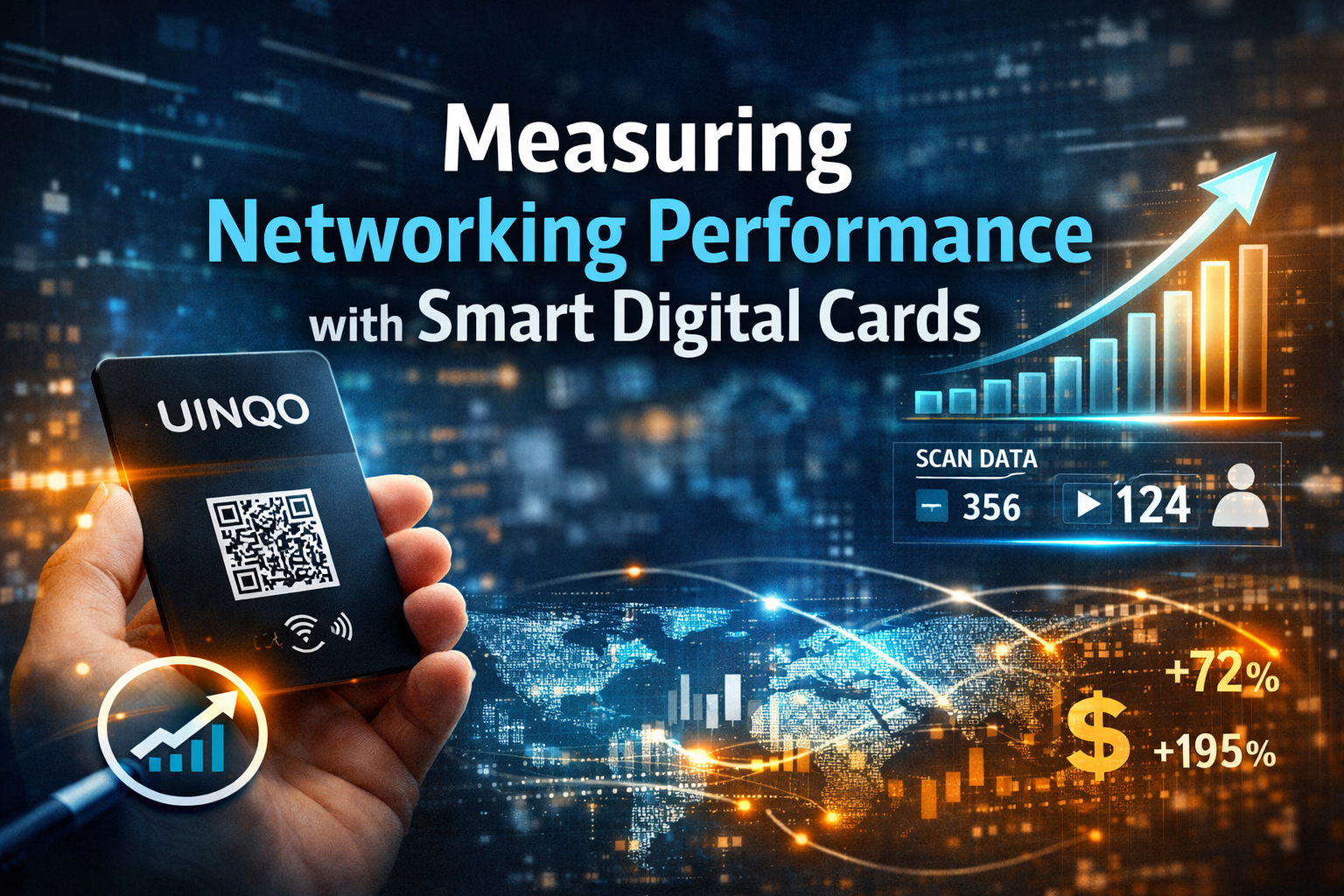
Modern digital business card platforms provide analytics insights that show profile views, interactions, and engagement patterns. Data transforms networking from guesswork into measurable strategy. If you cannot track performance, you cannot optimize it.
10 Overlooking Multi-Profile Flexibility
Professionals today often operate in multiple roles. You might be a consultant, entrepreneur, and speaker simultaneously. Sharing one generic profile for every situation limit relevance.
Multiple profile options allow you to tailor your presentation depending on the audience. At a tech conference, you can share your innovation-focused profile. At a startup pitch event, you can share your entrepreneurial identity. Contextual networking increases conversion probability because it aligns directly with the audience’s interests.
11 Forgetting to Nurture Relationships Long-Term
Networking is not only about acquiring clients; it is about building ecosystems. Many professionals only reach out when they need something. This transactional behavior weakens trust.
Consistent engagement, value sharing, and periodic updates maintain relationship health. Organized digital contact systems make it easier to schedule follow-ups and categorize warm leads versus long-term prospects. Sustainable networking builds recurring revenue streams.
12 Underestimating the Power of First Impressions
First impressions are formed within seconds. The way you present your contact details communicates your level of innovation, professionalism, and reliability.
Handing over a paper card may signal tradition, but sharing a smart NFC card or dynamic QR code communicates technological awareness and efficiency. When your networking approach reflects modern standards, it positions you as forward-thinking. In competitive markets, perception influences decisions as much as competence.
The Technical Shift: Networking as Infrastructure
Networking is no longer just a social activity. It is infrastructure for business growth. It involves data management, digital identity, analytics, and strategic follow-up systems. Professionals who fail to adopt integrated solutions often struggle to scale their connections into measurable revenue.
This is where integrated platforms like UINQO make a difference. By bringing NFC smart cards, dynamic QR code, personalized landing pages, smart contact categorization, multiple profile options, and creative card customization into one ecosystem, UINQO simplifies the technical side of networking. Instead of juggling disconnected tools, professionals can manage their entire connection strategy from a single platform.
The result is not just convenience. It is efficiency, professionalism, and measurable growth.
Turning Networking Into Client Conversion
Avoiding these twelve mistakes requires more than motivation. It requires systems. A structured, technology-driven approach ensures your networking efforts consistently lead to meaningful business opportunities.
Ask yourself honestly:
Are you tracking your connections?
Are you following up strategically?
Is your professional identity digitally optimized?
Are your contact details dynamic and up to date?
If the answer to any of these is no, you may be unintentionally losing clients.
Networking done right creates momentum. It builds trust before meetings, accelerates conversations, and shortens sales cycles. When supported by smart digital tools and organized data management, every handshake becomes a potential revenue stream.
In a world where attention is short and competition is intense, small mistakes carry high costs. The professionals who win are those who treat networking as a technical strategy, not a casual habit. UINQO stands at the forefront of this evolution, helping professionals adopt the smart way to connect and share. Because when communication is simplified and connections are amplified, opportunities follow naturally. The question is not whether networking matters. The real question is whether your current approach is helping you grow, or quietly costing you clients.
FAQ:
What is the most common networking mistake professionals make?
The most common mistake is focusing on quantity over quality, collecting many contacts without building meaningful relationships that can convert into clients.